

Should you stay in growth with your pension at 59, or is it time to get defensive?
And, in The Times this week: "Why you shouldn’t touch your tax-free pension in your fifties"
What’s in the newsletter?
Feature: Should you stay in growth with your pension at 59, or is it time to get defensive?
From Bec’s Desk: Preparing well for my 80s in my 50s
Read my article in The Times: Why you shouldn’t touch your tax-free pension in your fifties

“Should I stay in growth with my pension at 59, or is it time to get defensive?”
Markets have bounced around pretty hard in the last week. Crypto’s been smashed, volatility is back and the headlines on the economy continue to be grim. And whenever this happens, the same question lands in my inbox.
This time it came from Robert, first thing Friday morning. And lately, it’s coming up a lot more often.
Markets feel jumpy right now. The UK news cycle in 2026 is relentlessly messy. There’s ongoing anxiety about stubborn inflation, interest rates that stayed higher for longer than anyone expected, and the cost of living still biting even as wages try to catch up. Government finances are under pressure, taxes feel permanently “up for review”, and confidence is fragile after years of economic whiplash.
Layer on top of that fears about AI reshaping jobs, property prices wobbling, and bond markets behaving in ways that shocked people who thought they were the safe part of the portfolio, and it’s no wonder nerves are frayed.
So let’s tackle the big question head on:
If you’re 59, should you still be in growth with your pension, or is it time to get defensive?
First, pause for a moment. None of this is new.
If I walked you back over the last 30 or 40 years, you’d see the same pattern again and again. The dot-com boom and bust, the GFC, September 11, wars and oil shocks. There’s also been several banking crises, Brexit, COVID shutting the world overnight, sudden rate rises, property markets freezing, borders closing, jobs disappearing, bond markets falling when they were meant to protect you. Think about it… panic, relief, repeat.
Every single generation thinks this moment is uniquely dangerous. It never has been yet!
What does change is how it feels when you’re in your late 50s.
Suddenly, you’re not just watching markets wobble from a distance. You’re close enough to retirement to feel it in your gut. It can feel like you’re standing right at the edge, thinking,
“I really can’t afford to get this wrong now.”
So let’s slow this down and put it into plain English.
This decision is not really about your age.
It’s about when and how you’ll actually use your pension and your ISAs.
If you’re 59 or 60 but you’re not planning to draw heavily on your pension and ISAs for another 5, 10, or even 15 years, then your time horizon is still long. And long time horizons are exactly what growth assets are designed for. They are bumpy in the short term, yes, but historically they’ve done a much better job of growing money faster than inflation over time.
This is the part people often fail to understand. You don’t spend all your money in the first few years of retirement. And modern retirement is not a short phase anymore. Many people will spend 25 or 30 years drawing income. That means a large chunk of your money still needs to keep working for a very long time.
In the UK, there’s another important layer to this conversation.
Most people aren’t actively choosing “growth” or “defensive” at all. They’re in lifestyle or target-date funds by default. These funds automatically reduce risk as you approach a nominated retirement age, steadily shifting you out of equities and into bonds and cash, often without any check on whether that timing actually matches your plans.
For some people, that glide path is helpful.
For others, it quietly pushes them into a far more defensive position than they realise, far earlier than they need.
And this matters, because we also need to say something else out loud.
More people in the UK (than in Australia) are genuinely terrified of growth assets.
Not just cautious, properly afraid.
For many, “growth” feels like gambling. It’s associated with crashes, pension scandals, broken promises, and the fear of losing everything just as retirement comes into view. That fear has been learned over decades, and it’s understandable.
But avoiding growth altogether isn’t a risk-free choice. It’s just as risky in my opinion.
Inflation doesn’t arrive with dramatic headlines in the news. Instead, it quietly erodes your spending power year after year. And over a long retirement, money that never grows is money that steadily shrinks in real terms.
Which brings us to the real issue. The biggest risk for most people isn’t growth versus balanced investments. It’s their behaviour.
If market falls make you anxious, or if you know you’re the type who might switch out after a big drop just to stop the discomfort, that’s the danger zone to be aware of and catch yourself. Not because growth is “bad”, but because panic-selling is how real, permanent damage gets done to retirement plans.
In that case, holding a slightly more balanced mix isn’t about maximising returns. It’s about helping you stay invested when things wobble, instead of jumping out at exactly the wrong time.
Another important question is whether you’ll need a lump of money soon.
If you’re planning to use part of your pension in the next couple of years, perhaps to clear a mortgage, support family, or fund a big life change, that portion probably shouldn’t be riding market ups and downs. One of the most overlooked ideas in retirement planning is that you don’t have to treat your entire pension the same way.
Some money can be invested for long-term growth. While other money can be kept more stable for near-term needs.
What worries me most is when people freeze.
They move everything to cash “until things settle down”. Or they let their lifestyle fund quietly slide them into ultra-defensive settings because the economic mood feels unbearable. Then they sit there for years, missing recoveries, while inflation quietly eats away at their future income. Ironically, fear-driven decisions often create more risk, not less.
A more sensible approach assumes the world will always be messy. Because it is. And it always has been. So if you’re in your late 50s and feeling nervous right now, the question isn’t really “growth or defensive?”
It’s this:
How do you stay invested in growth without blowing yourself up when markets wobble?
Two ideas help here: buckets and guardrails.
Buckets are about matching money to when you’ll need it. You can think about your pension and other investments in three broad buckets.
The first bucket holds money you expect to use in the next few years. This is your sleep-at-night money. It’s there to fund early retirement spending and cover surprises. This bucket is usually more defensive.
The second bucket is for the middle years. Money you won’t touch for a while, but not decades away. This is often where balanced strategies sit.
The third bucket is long-term money. Funds that may not be touched for 10, 15, or even 20 years. This is where growth assets belong. This bucket helps protect you against inflation and the risk of living longer than expected.
Guardrails are what stop you making emotional decisions at the worst possible time.
Instead of reacting to headlines, you set simple rules in advance. For example, if markets fall sharply, you don’t sell growth assets. You draw spending from your defensive bucket instead. You only rebalance back into growth when things stabilise, not when fear is running the show.
Guardrails don’t eliminate risk, nothing does. Their job is just to help you contain it. That’s very different from gambling on the market, or pretending volatility won’t happen. Because it will, always. The goal should just be to build a plan you can live with, stick to, and sleep well with. Then, make it epic!

If you’ve been following along, you’ll know I’ve just turned 50. And I’m taking this decade very seriously. I want my 80 year old self to be pleased with how I looked after my 50 year old body and mind. So I’m putting a big focus on changing my exercise program to include a lot more heavy weights, regular walking and other cardio too. I’m also re-shaping my diet to have a lot more protein and wholesome eating in it.
I’m not pretending to be an expert in the space. I’m fortunate to have interviewed some of the best in the world in 50+ physiology in my Aussie podcast over the last year - and I’m reading a lot of books too. Health needs to be a priority in midlife - whether you like it or not. And I’m determined this year is the year that I don’t stop the focus part-way-through. How are you going with your health?
The UK voice of How to Have an Epic Retirement is going to be one of my other focuses on my Facebook and Instagram page this month, teaching some of the lessons in short clips. If you don’t follow me, be sure to come along. I’ll #UK at the beginning of posts so you can see which ones are for you… I also make quite a bit of Aussie education which you can roll past.
Facebook: facebook.com/becwilsonepic
Instagram: instagram.com/epicretirement
The book is going super-well, so my focus is now to grow this newsletter which is already read by more than 90,000 people in the UK. If you know someone approaching retirement, send it to them and suggest they subscribe for free. Hopefully you’ll make two people very happy (me and them). I’m trying to bring it out weekly, with useful titbits each week. If you have ideas or things you need help with, message me - simply reply to the email.
Now, have a great Sunday… Make it epic.
Cheers - Bec Xx

Author, podcast host, columnist, retirement educator, and guest speaker

Why you shouldn’t touch your tax-free pension in your fifties
Just because you can access your pot from 55 doesn’t mean that you should
In the UK, something rather odd happens in your mid-fifties. Nothing dramatic changes about your health, your energy, or your usefulness to the world. But suddenly the system taps you on the shoulder and says: you may now start spending your pension.
For many people, that permission quickly snowballs into a big and often poorly examined question. If I can make withdrawals from my pension, should I take as much of it as I can? And once that thought takes hold, retirement can start to feel like the logical next step, even if nothing else in life is actually pointing that way.
Someone called Sam wrote to me last week grappling with exactly this issue. He is 54, tired, financially organised and approaching pension-access age.
“I don’t need the money yet,” he said. “But it feels like this is the point where I should take the 25 per cent tax-free. The system lets me do it for a reason, doesn’t it? Or maybe I should think about retiring.”
That feeling is a real problem.
Read the rest of this article here in The Times. It was published on Monday 2nd February 2026

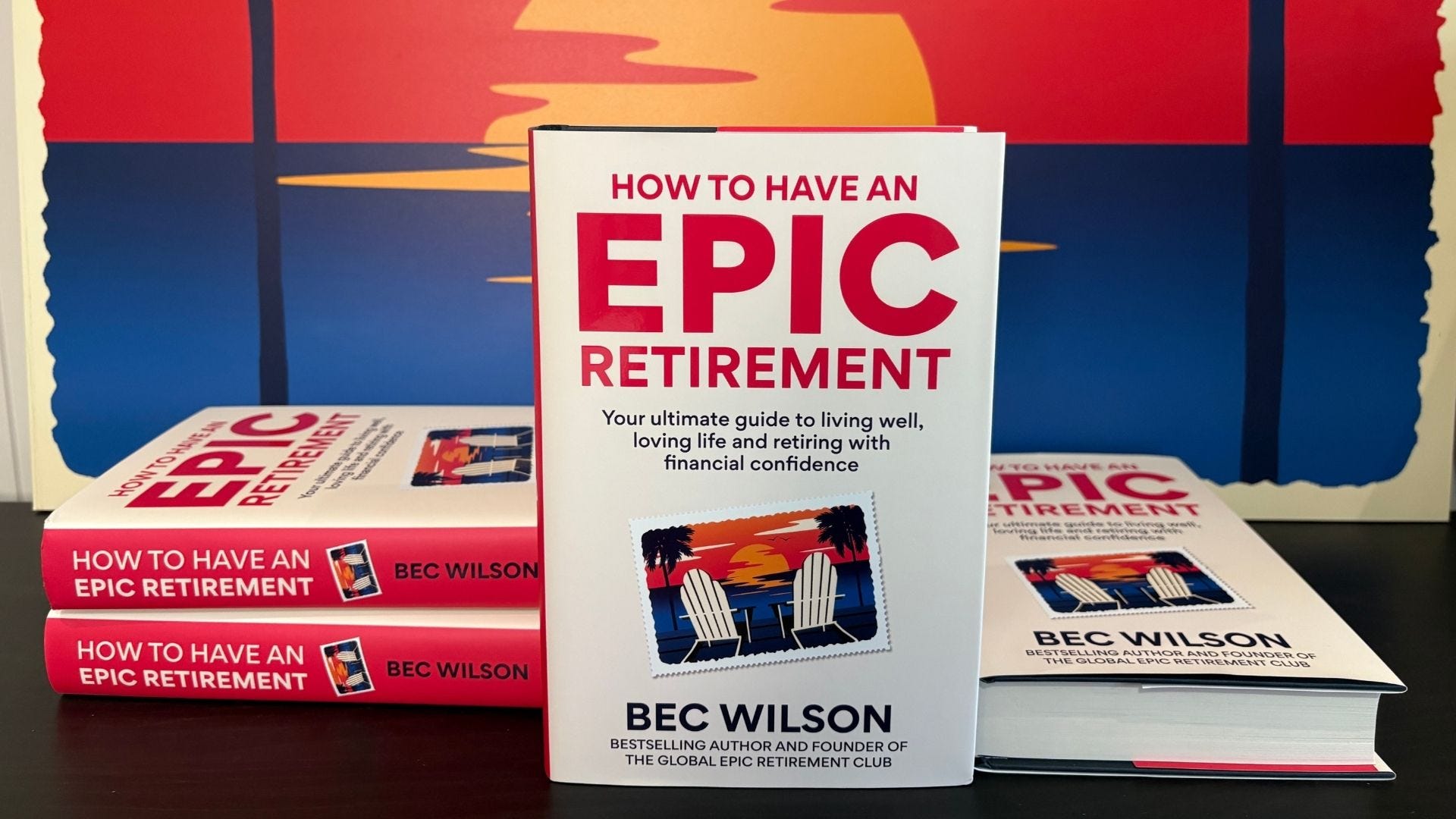
Get your copy of the new UK Bestselling pre-retirement guidebook, How to Have an Epic Retirement: Your ultimate guide to living well, loving life and retiring with financial confidence.