

Your first year of retirement: the biggest challenge might not be your money
And, in The Times: "The real risk from AI isn’t losing your job — it’s wrecking your retirement "
What’s in the newsletter?
Feature: Your first year of retirement: the biggest challenge might not be your money
From Bec’s Desk: Preparing the Epic Retirement UK Course - it’s almost ready
Read my article in The Times: The real risk from AI isn’t losing your job — it’s wrecking your retirement

Your first year of retirement: the biggest challenge might not be your money
Most people spend more time planning their retirement finances than they spend thinking about who they’ll actually be when they get there. That’s a problem, and it tends to show up about six months in.
Here’s the question I want you to sit with this week: if someone asked you to describe yourself at a dinner party the week after you retire, what would you say? For most of us, the answer has been the same for twenty or thirty years. You lead with what you do. Your job title, your industry, your company. It’s shorthand for competence, status and purpose all at once. And then one day, it’s just gone.
This isn’t a small thing. Research on retirement consistently shows that identity loss, not financial stress, is the most common cause of what people describe as a difficult first year. The people who struggle most aren’t usually the ones who ran out of money. They’re the ones who ran out of answer to the question: what do I do with myself now?
The good news is that this is entirely workable, but only if you start thinking about it before you get there, not after.
So here are three questions worth sitting with this week:
What do you do that has nothing to do with work? Not what you’d like to do in retirement, but what you actually do now, outside of your job. If the honest answer is not much, that’s important information. Retirement doesn’t conjure purpose out of thin air. It just removes the structure that was filling the space.
Who are you to the people who matter most to you? Your partner, your kids, your close friends. How do they describe you? What role do you play that has nothing to do with your career? That version of you is the foundation you’re building on.
What would you do on a Tuesday at 11am if you had no obligations and no agenda? Not a holiday Tuesday. A regular one. If you can’t answer that with something specific and genuine, it’s worth spending more time on that question than on your superannuation projections this week.
Retirement is long. For most people reading this, it’s twenty to thirty years. The financial plan gets you there. The identity work is what makes it worth arriving.
Start that work now. It’s more important than you think.
Bec Xx
I cover a lot more on this in How to Have an Epic Retirement, my UK Bestseller (An Australian/New Zealand edition is also available)

The weather is starting to turn on both sides of the world. Down under where I am the heat is starting to dissipate. I’m hoping you’re starting to feel things warm up on the other side of the world.
I’ve been traveling across Australia and will be for the next five weeks, as a keynote speaker on an Adviser Roadshow. I love getting out there. My topic is “The future of Retirement” and what it will look like over the years ahead. This week I saw the inside of Canberra, next week I’ll be in the beautiful Gold Coast.
And, while I’m on the road, I’m putting the finishing touches on the workbook for the How to Have an Epic Retirement UK Course. We’re in the editing stage now, with all the filming done. It’s quite a big effort to product a course of this scale - one that runs for 6 weeks, with 14 modules (85+ videos) of lessons. And there’s a 130+ page workbook too!
As I mentioned last week, the course will take a very similar shape to the one we run in Australia, as it’s become quite popular here. We’ve locked down our live Q&A guests so we’re full steam towards releasing the course for sale in the next two weeks.
You can register your interest here (no obligation), and we’ll be launching at pilot pricing (very low for this first run so we can gather feedback and refine it with you). The course will start in May and go for 6 weeks finishing right as Summer holidays hit.
And, if you’re a Facebook or Instagram user I’ve kicked off new, UK-specific accounts too, so if you want to see them, please pop both a follow at Facebook.com/epicretirementuk and Instagram.com/epicretirementuk
Until next week — make it epic.
Cheers,
Bec Xx

Author, podcast host, columnist, retirement educator, and guest speaker

How to Have an Epic Retirement: The Book
Get your copy.
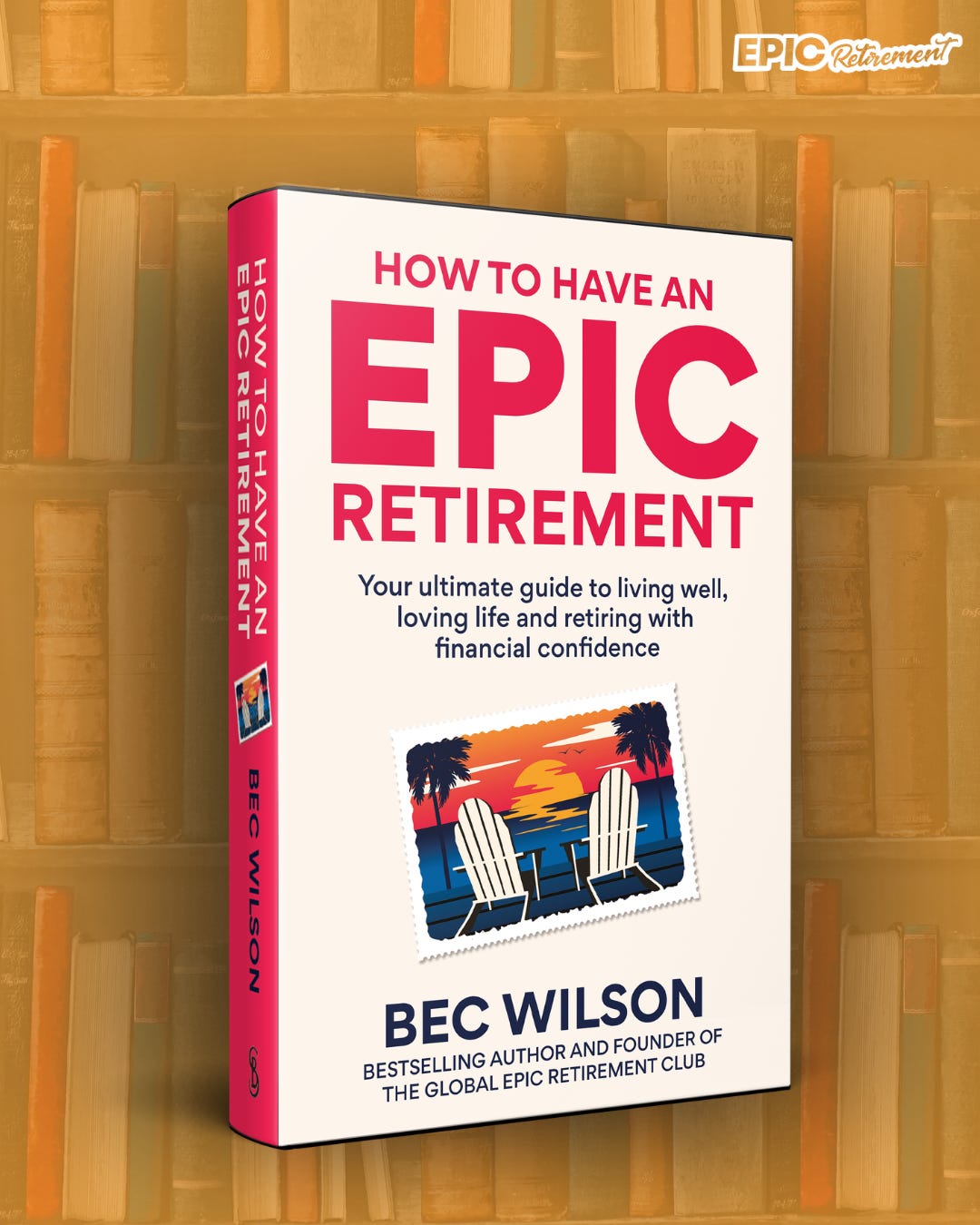
Get your copy of the new UK Bestselling pre-retirement guidebook, How to Have an Epic Retirement: Your ultimate guide to living well, loving life and retiring with financial confidence.
Currently #5 on the Amazon UK Bestseller List for Retirement Planning and #1 on the Amazon Australia Bestseller List for Retirement Planning 😉

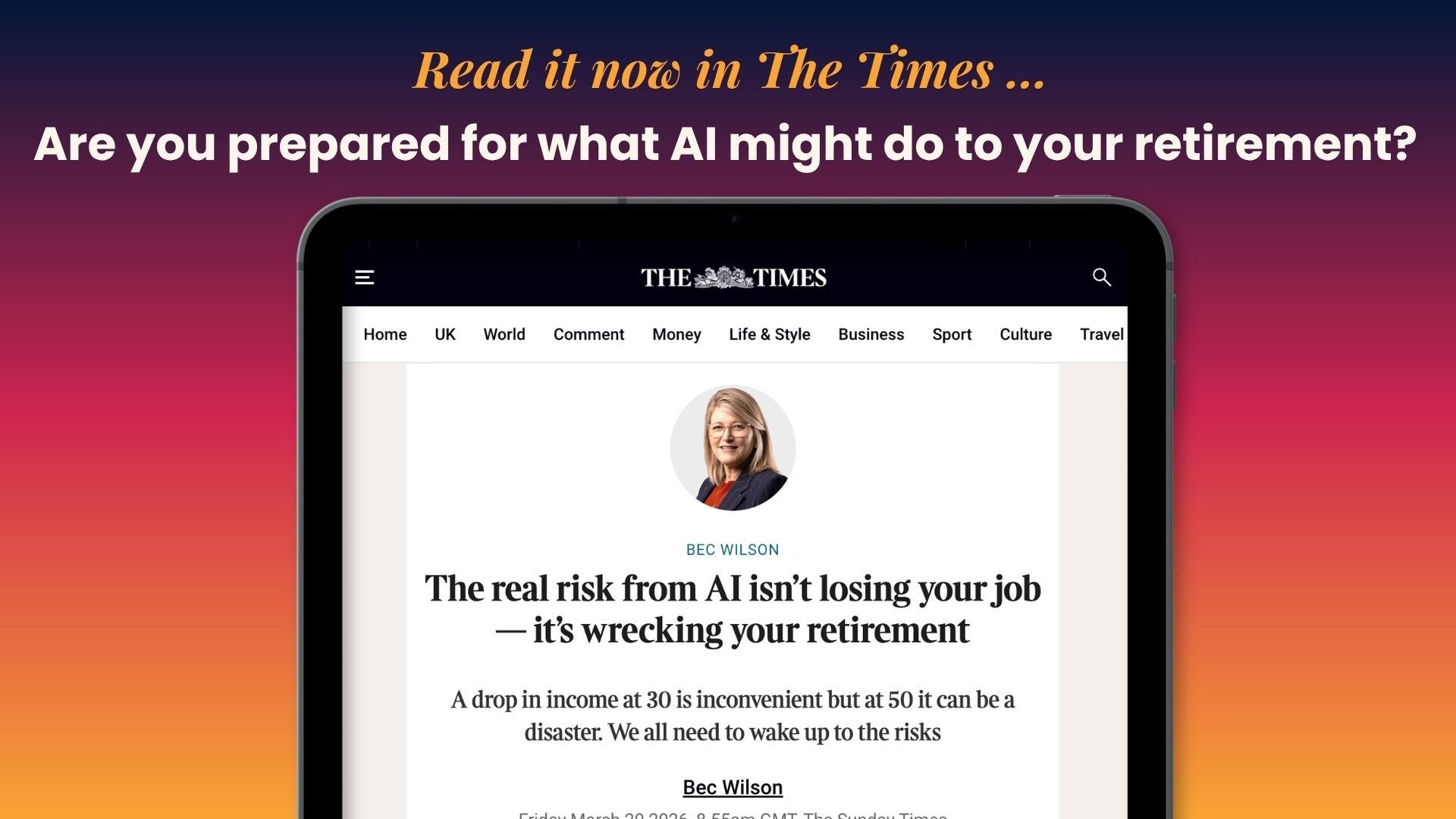
The real risk from AI isn’t losing your job - it’s wrecking your retirement
A few short weeks ago, before war broke out in Iran, everyone was worried about how AI was going to affect companies, jobs and the stock market. I also heard a lot about how it may affect our children’s future careers.
The one thing I didn’t hear a lot of talk about was how it could affect our personal finances, and what we should do to prepare for the risk that AI may take parts of our jobs, alter our industries for ever and render the skills we’ve spent years building much less valuable. And most people aren’t remotely prepared for that.
We tend to think about work in fixed terms. You build a career, your income grows, you move up the hierarchy and then at some point you retire. For decades that model has underpinned how we save, invest and plan.
Read the rest of this article here in The Times. It was published on Friday 20th March (and in Print on Saturday 21st March 2026). I write fortnightly for The Times - keep an eye out as my next article will drop any day!
I agree that for most people their job defines them but I never thought that and always knew it was just a means to support myself. Most people need a purpose for existing or just getting up in the morning but I look forward to not having to get up, for anything! I am a creative so the passion comes from within not from my surroundings. I consider myself lucky in this. I look forward to just being able to follow my passions and see where it leads.
Great question on what will first week of retirement be like. For me, I will take a break, don’t have too many things scheduled; allow space to slow down and just be