

Your brain needs a retirement plan too
And in The Times 'How to overcome the fear that ruins retirements'
In this week’s edition:
Feature story: Your brain needs a retirement plan too
The Times: How to overcome the fear that ruins retirements
From Bec’s Desk: 99p for the book! Ends this week

Your brain needs a retirement plan too
I don’t think enough retirement planning stops to ask what the point of it all is if your brain isn’t along for the ride. You can get the pension stuff sorted, the income streams and the taxes mapped, the timing nailed, and still be missing the thing that makes all of it worth having.
The World Health Organization just released the first update to its dementia risk-reduction guidelines since 2019, and it’s worth ten minutes of your time. Not because it’s alarming. If anything, it’s the opposite. The headline finding is that up to 45% of dementia risk comes down to factors you can actually do something about. Genetics don’t get a vote in that 45%, your choices do.
That’s a bigger number than most people assume, so it’s worth being specific about what actually deserves your attention and what’s just noise.
If you had to guess the single biggest modifiable risk factor for dementia, you’d probably say diet, or exercise. The real answer, according to this review, is keeping your cholesterol in check, closely followed by managing your hearing loss. Each one accounts for around 7% of dementia cases on its own, which is more than smoking, more than diabetes, and more than physical inactivity.
Hearing loss is the real sleeper here. When your hearing declines, your brain has to work harder just to fill in the gaps in conversation, and over years that extra strain seems to take a real toll. Only around 17% of people who’d benefit from a hearing aid are actually using one. If you’ve been putting off a hearing test because you don’t feel that deaf yet, take this as your nudge. The WHO now actively recommends hearing aids as a dementia risk-reduction strategy, which is a new and fairly firm addition to this edition.
Cholesterol is less interesting to talk about but just as important to act on. If you’re in your 50s or early 60s and haven’t had it checked lately, or you know your numbers aren’t great and you’ve been meaning to deal with it, this is the moment. It sits in the same category as reviewing your insurance or updating your will: not urgent-feeling, really important, and easy to keep putting off.
Physical activity still carries the strongest evidence in the whole document. Not becoming a gym junkie, just not being sedentary. Walking regularly, gardening, golf without the cart. If you’re already doing that, you’re doing the single most evidence-backed thing available to you.
Social connection is the newest addition to the guidelines, and it matters more than it might sound. In 2019 there wasn’t enough evidence to make a call on this one either way. Now there is: staying socially active is officially linked to lower dementia risk. About one in four older adults globally report feeling isolated, and retirement is often exactly when that happens quietly, fewer work colleagues, kids who’ve moved out, a smaller circle than you had at 45. It’s worth treating with the same seriousness as diet or exercise, not as something that will sort itself out.
Then there’s what the guidelines pointedly don’t recommend, which is almost as useful to know. Vitamin B, vitamin E, omega-3 fish oil, multivitamins: the evidence review found no dementia-prevention benefit from any of them, provided you don’t have an actual diagnosed deficiency. If you’ve been taking a fish oil capsule “for your brain,” the science doesn’t back that up, and that’s money better spent on the hearing test.
The idea that a glass of red wine a night is protective doesn’t hold up either. It’s most likely a statistical illusion: people who already have health problems tend to cut back on drinking, which makes the moderate drinkers left in the data look artificially healthy by comparison. There’s no dementia-prevention case for drinking more than none.
And for women weighing up menopausal hormone therapy, the guidelines are now explicit that it shouldn’t be started or continued specifically to prevent dementia in women 65 and over. That doesn’t change the case for MHT to manage hot flushes, sleep, or bone health. Those reasons stand on their own. It just means brain protection isn’t one of them.
None of these individual actions is a magic bullet, and the guidelines are upfront about that. Managing cholesterol alone won’t dramatically cut your risk. Neither will hearing aids alone, or exercise alone. What the evidence shows most clearly is that tackling several of these together, blood pressure, hearing, activity, social connection, produces the strongest and most consistent results of anything reviewed.
Which is oddly reassuring, when you sit with it. It’s not about finding the one perfect intervention. It’s the same principle as retirement planning itself: no single decision, when you stop work, how you draw down your pensions, when you take the State Pension, what you do with your time, carries all the weight on its own. It’s the combination that gets you to an epic retirement.
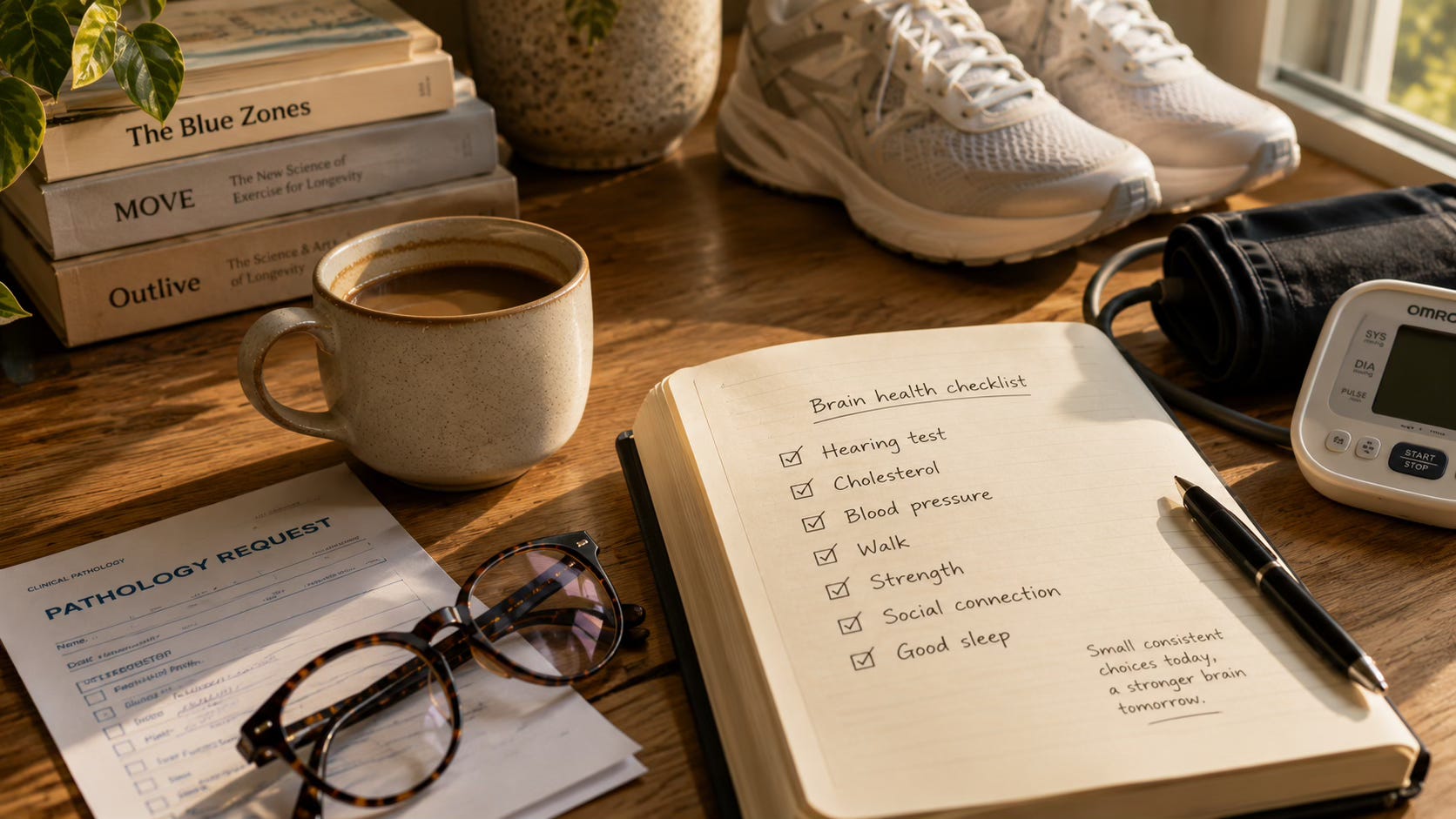
If you want a place to start: book the hearing test if it’s overdue, ask your doctor for your cholesterol and blood pressure numbers if you don’t already know them, and take an honest look at whether your social calendar has been shrinking and try fitting in a walk every day or two. None of that requires a life overhaul. It just means treating your brain with the same planning mindset you’d bring to your finances.
Source: World Health Organization, Risk reduction of cognitive decline and dementia: WHO guidelines, second edition (2026).

Happy Sunday. This week I got an update on how our special deal for 99p for the UK is going. Lots of people have been downloading the book - thousands and thousands 😯. I want to ask - if you have read it via Amazon, would you consider leaving it a review please. It really helps people have confidence in the book being worthwhile reading.
And yes - if you missed the big ad at the top of the newsletter - the UK edition of How to Have an Epic Retirement has been named Kindle’s 99p Book of the Month. For tjust a few more days - until the end of July you can grab it on Kindle for less than the price of a coffee, so if you’ve been meaning to read it, this is the moment. Get your copy here.
The Epic Retirement UK Flagship Course will be kicking off on-demand in just two weeks time. We’re taking a quick minute to improve things, put some updates in and make sure all the feedback is taken on board from the pilot. Then, we’ll be kicking it off. You can register your interest here - we’ll offer a special deal to those on the waitlist as soon as it launches.
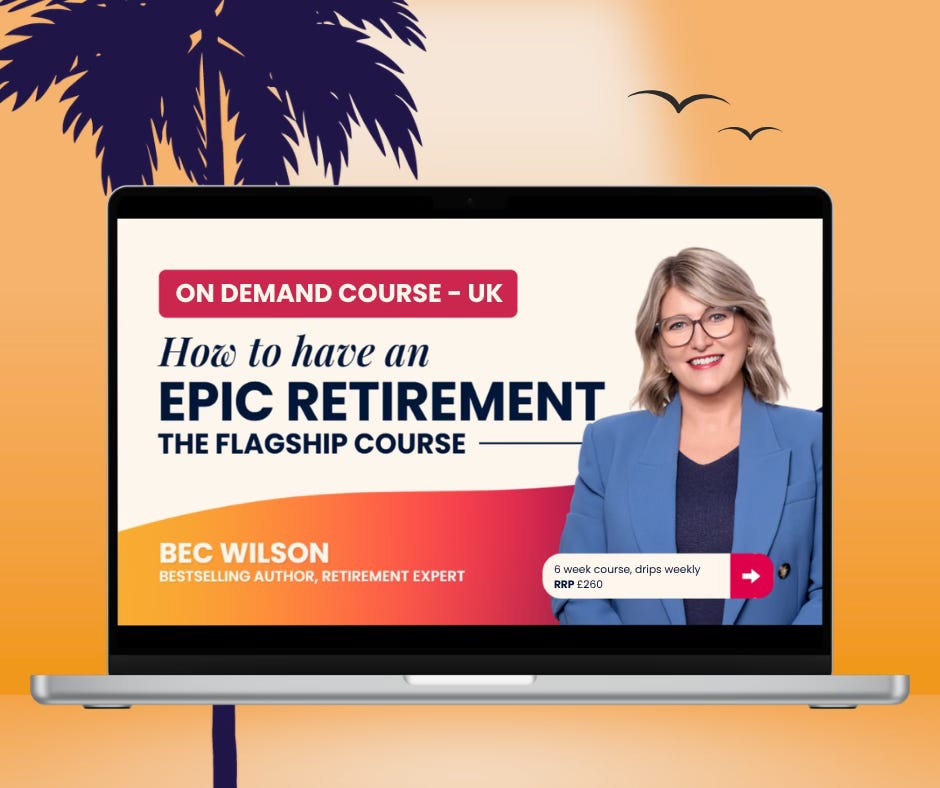
It includes:
6 weeks of online retirement lessons (14 modules of lessons)
Access to our recorded online Q&As (3 of them - we recorded them during the pilot)
An invitation to 4 live Q&A events over the year ahead with retirement experts - we will develop a calendar of events for our program attendees - held at least quarterly, if not more frequently.
A digital Conversation Starter workbook
Fully integrated activities that bring the course to life
A digital copy of How to Have an Epic Retirement - The UK Edition
We’ve put a dedicated web page together for the course - which you can view here and download a brochure. There’s some great testimonials over there.
Now - enjoy your Sunday. Hope to see you on the course
Bec Xx

Author, podcast host, columnist, retirement educator, and guest speaker

I am the retirement columnist for The Times, UK. You can read my most recent column here or look through all my columns here.
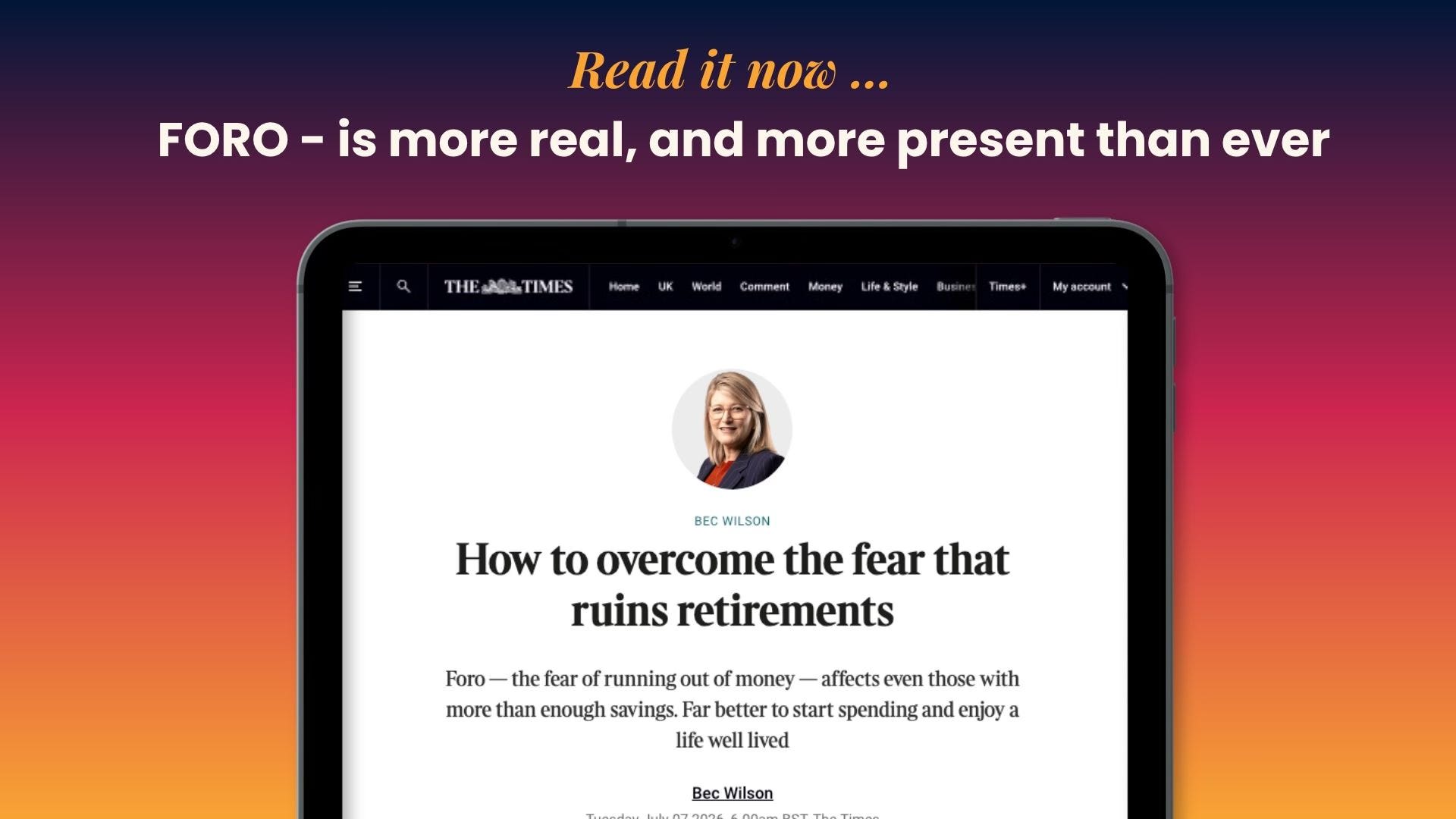
How to overcome the fear that ruins retirements
Foro — the fear of running out of money — affects even those with more than enough savings. Far better to start spending and enjoy a life well lived
Retirement comes with a big problem that we don’t talk about enough. There are people sitting on perfectly good pensions with quite healthy savings and no mortgages who cannot bring themselves to spend their money. They know that the numbers add up and they may even have a financial adviser who has told them they are going to be fine yet still they balk at the idea of spending.
This is called foro — the fear of running out. And it is more widespread, more stubborn and far more costly than most want to admit.
It can mean a life not lived to its fullest: trips not taken, bathrooms and kitchens not renovated, and years of the good stuff put off for the hypothetical “one day” that never seems to arrive. Meanwhile the money sits there doing nothing particularly useful and those who are meant to be enjoying their best years grow older.
The article was published in The Times, on Thursday July 7 and is available for reading here.
Got a topic you’d like me to cover? Send me a message
Simply hit reply and send me a note. I’m keen to know what’s worrying you, what is driving you and what you want more conversation and education about.
Why do I write a separate newsletter for the UK?
I write a separate newsletter specifically for the UK, because the financial system here is completely different to Australia, where I’m based. Your retirement is shaped by the State Pension, workplace pensions, ISAs and HMRC rules. Not superannuation or the Australian Age Pension.
If I just sent you the Australian version with a few words swapped out, it wouldn’t actually be useful to you. And useful is the whole point.
The big conversations, about when to step back from work, what you want the next chapter to look like, how to make your money last, those are universal. But the practical detail needs to reflect the system you’re actually living in. So that’s what we’ve built here. Tell your friends - we want to help you make your retirement epic - the UK way.