

What I’d actually do this weekend if I was 55 or 65 and the world felt a bit wobbly
And, in The Times: "The real risk from AI isn’t losing your job — it’s wrecking your retirement "
What’s in the newsletter?
Feature: What I’d actually do this weekend if I was 55 or 65 and the world felt a bit wobbly
From Bec’s Desk: The UK Epic Retirement course is about to launch
Read my article in The Times: The real risk from AI isn’t losing your job — it’s wrecking your retirement

What I’d actually do this weekend if I was 55 or 65 and the world felt a bit wobbly
What a week! Oil hit $113 a barrel yesterday and it could go higher before this newsletter even reaches you. Petrol is sitting at around 145p a litre right now, up nearly 10p in just three weeks. Diesel is worse! The war in the Gulf is now in its fourth week with no sign of letting up, and the Bank of England, which had been expected to cut rates this week, held at 3.75% and quietly warned that hikes might be back on the table if things drag on.
Energy bills were already 14% higher in real terms than before Ukraine. Mortgage rates on fixed deals have been creeping back above 5%. And if you’re already feeling the squeeze at the supermarket and the petrol station, none of this will feel surprising.
So if you’re in your 50s or 60s and that familiar knot of worry has crept back in this week, I want to talk to you like we’re friends. Because there are a few things worth doing this weekend. None of them are particularly hard or scary, but they matter.
First, step away from the noise for a bit
Turn off the finance news for the weekend. Not because what’s happening doesn’t matter – it clearly does – but because none of the decisions you need to make right now will be improved by watching oil tickers and hearing market updates scroll past all Saturday.
The Gulf disruption, the inflation creep, the Ofgem uncertainty – these are real. But they’re largely outside your control. What you can control is whether you respond thoughtfully or react out of fear. And that always starts with slowing down and really thinking things through.
Remind yourself what your actual timeline is
Here’s the question I’d ask you to sit with: “when do you actually need to draw on your investments or pension for income?”
Not when you want to stop working. When you’ll genuinely need the money to live on.
For a lot of people between 55 and 65, the honest answer is still five, eight, even ten or more years away. Markets have come back from oil shocks before, in 1973, 1990, 2008. They’ve recovered from worse than this. The FTSE has fallen about 10% from its highs right now already, with all of this. Time is what gives your investments room to breathe.
If you’re already drawing from your pension or ISA, the question shifts a little, but the heart of it is the same: “do you have enough in stable, lower-risk assets to avoid being forced to sell the good growth stuff while it’s down?”
Check whether you have a buffer and be honest about it
This is the one I keep coming back to with people in this season of life.
Do you have two or three years of living expenses sitting in something stable like a cash ISA, easy-access savings, a fixed-rate bond? Not in the volatility of the stock market. Somewhere it just sits, ideally keeping pace with inflation, but ready when you need it.
Because if you do, you can ride this out. You’re not forced to sell when markets are wobbling. You have choices. That buffer isn’t dead money, it’s the thing that lets you stay calm while everyone else is anxious.
IF YOU DON’T HAVE A BUFFER RIGHT NOW
I want to be straight with you here, because glossing over this doesn’t help anyone. If you don’t have much set aside outside of your pension or investments, this week probably felt harder than it needed to. And that’s worth acknowledging — not as a reason to panic, but as useful information.
The question to sit with this weekend isn’t “how do I fix everything at once.” It’s simpler: what’s one thing I could do in the next 90 days to start building a bit more breathing room?
Maybe it’s redirecting £200 a month into a cash ISA you don’t touch. Maybe it’s looking honestly at where money is quietly leaking out. Maybe it’s a call to your pension provider’a guidance team or an independent financial adviser – not to overhaul everything, just to understand where you actually stand. (Worth knowing: when markets are turbulent, advisers get very busy. Don’t leave that call too long and expect to wait for an appointment.)
You can’t build a buffer overnight. But you can decide to start this weekend. That decision, made quietly over a cup of tea on a Saturday morning, matters more than people realise.
Have an honest look at your spending right now
With petrol up, the weekly shop creeping higher and energy costs rising again, your day-to-day spending has probably gone up without you even noticing. This isn’t about cutting back dramatically, it’s about knowing where you stand.
Grab a cup of tea and spend half an hour with your last few months of bank statements. Just three questions:
What am I actually spending each month right now?
Has that crept up in the last three months?
Is there anywhere I can claw back a bit of breathing room?
You’re not looking for the perfect spending process. You’re just looking for a clearer picture of your spending than you had on Friday and where you could make sensible trims.
Finally, think about what this stage of life is really asking of you
There’s a shift that happens for a lot of people in their 50s. It stops being just about building wealth and starts being also about protecting what you’ve built, so you can actually enjoy it. Making the choices you want to make. Feeling secure enough to sleep at night.
In that context, another week of volatile markets and geopolitical noise shouldn’t be a melodramatic concern. It should be a prompt or a reminder to check whether your setup actually gives you flexibility and the ability to make good decisions rather than being forced into bad ones.
That’s what this weekend is for. Calmly taking stock of where you are, and taking a little more control of where you want to be.
I’ll leave you with this.
The war in the Gulf is looking pretty serious. The oil price is genuinely high. The cost of living pressure is real – and if you’re already stretched, none of this feels easy. I’m not going to pretend otherwise.
But the people who come through these periods best aren’t the ones who predicted it or moved everything to cash in February (because they never know when to get back in). They’re the ones who had a plan they trusted, a buffer they could lean on, and the discipline not to let the noise make their decisions for them.
If you’ve got the buffer – great. Sit tight and trust the plan.
If you don’t – this is your weekend to decide to start building one. That decision, made over a cup of tea on a Sunday morning, is worth more than you might think right now.
You’ve got this. And I’ll be here with you through it.
Bec x
I cover a lot more on this in How to Have an Epic Retirement, my UK Bestseller (An Australian/New Zealand edition is also available)

This week I’m packing my bags for a mum’s weekend away… my last one ever through the school structure and it feels like the end of something.
My youngest is in their final year of school, and it’s just hit me that all those built-in structures, the school rhythms, the WhatsApp groups, the sideline chats, the annual mums’ weekends… they’re starting to fall away.
This one feels like a bit of a milestone. A little emotional, if I’m honest.
I’d love to say I’m breezing into this next phase, but there’s a small part of me wondering… what replaces it? If you’re a few steps ahead of me and have navigated this shift, I’d genuinely love to hear how it unfolded for you.
Meanwhile, behind the scenes, something exciting is taking shape.
We’ve just finished recording the UK version of the How to Have an Epic Retirement course. It’s been such an interesting process adapting everything to fit the UK system, from pensions and drawdown to how people actually think about retirement here.
We’ve also locked down our live Q&A guests, and it’s all coming together beautifully.
We’ll be running the UK and Australian courses side by side, just in different time zones, each with fully localised programs. It still feels slightly surreal to say that. Two sides of the world.
You can register your interest here (no obligation), and we’ll be launching at pilot pricing (very low for this first run so we can gather feedback and refine it with you) in the next 7–10 days, once the final details, guest speakers and workbooks are all ready. The course will start in May and go for 6 weeks finishing right as Summer holidays hit.
If you’re a Facebook or Instagram user I’ve kicked off new, UK-specific accounts too, so if you want to see them, please pop both a follow at Facebook.com/epicretirementuk and Instagram.com/epicretirementuk
It really does feel like a season of endings… and openings. I can’t wait to launch.
Until next week — make it epic.
Cheers,
Bec Xx

Author, podcast host, columnist, retirement educator, and guest speaker

Back at the top of the bestseller list
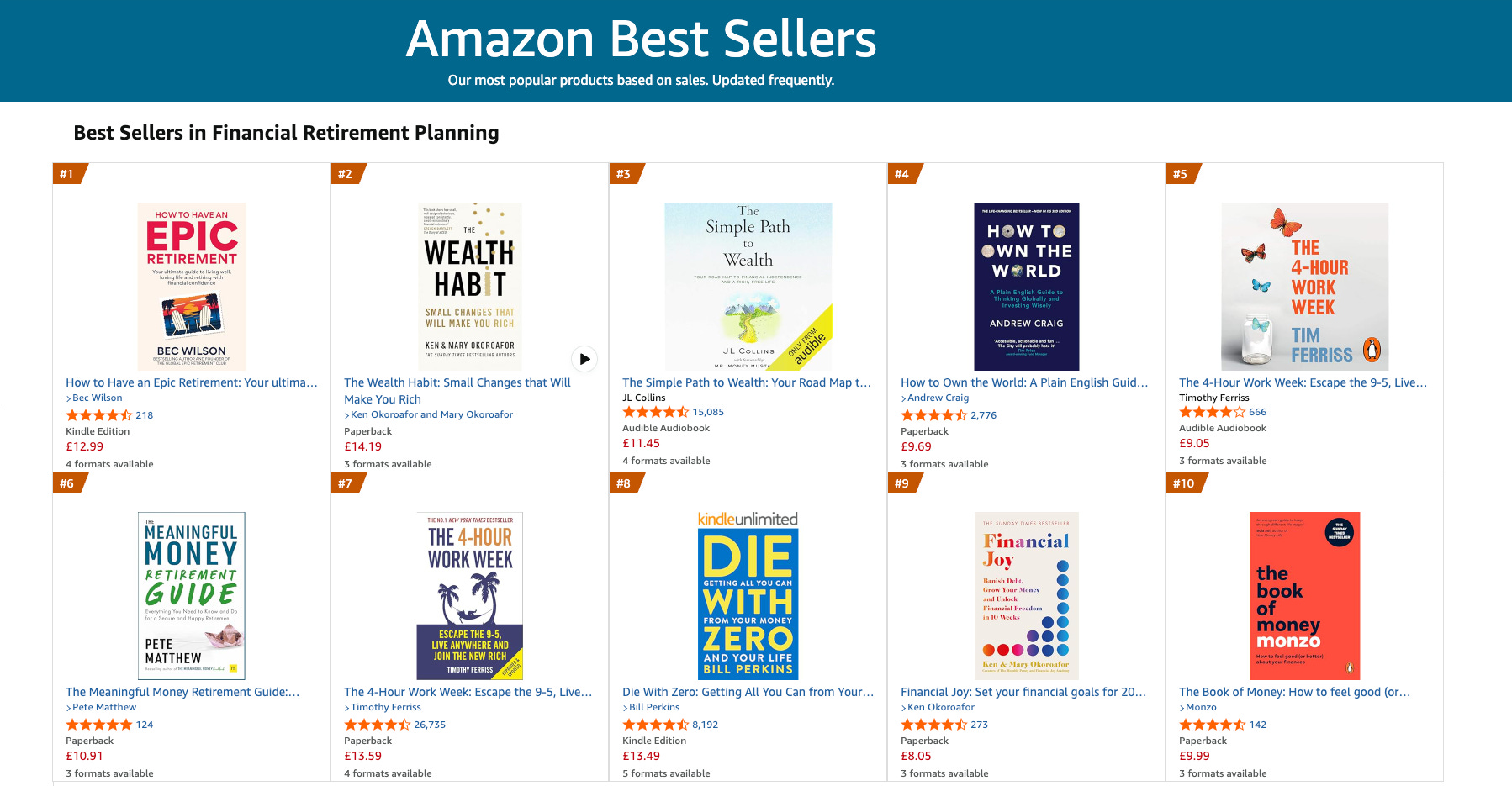
Look at that will you! Our little UK edition is back at the top of two of Amazon’s big bestseller lists this week. If you haven’t got yourself a copy, you’re missing out.
Get your copy of the new UK Bestselling pre-retirement guidebook, How to Have an Epic Retirement: Your ultimate guide to living well, loving life and retiring with financial confidence.

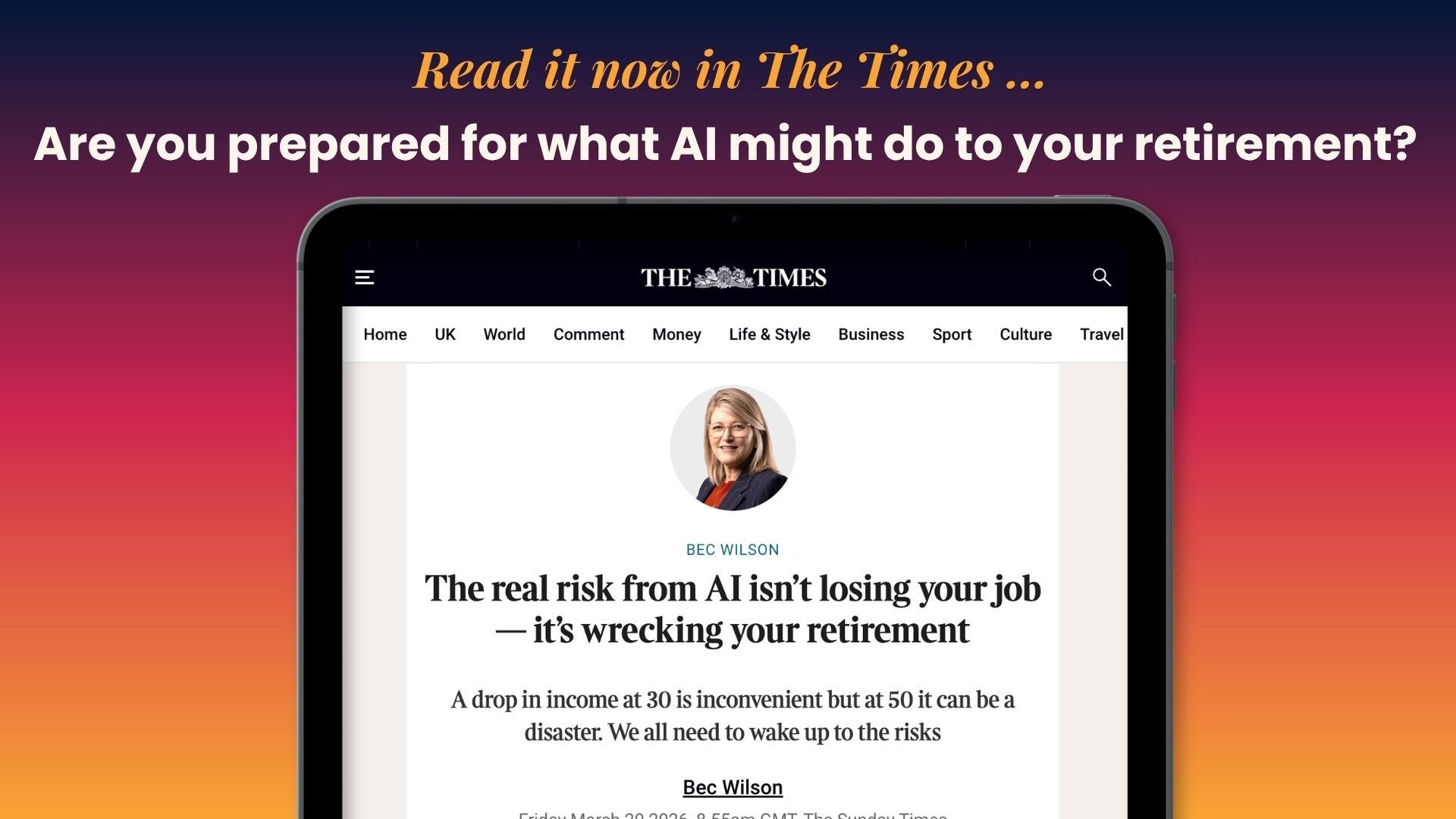
The real risk from AI isn’t losing your job - it’s wrecking your retirement
A few short weeks ago, before war broke out in Iran, everyone was worried about how AI was going to affect companies, jobs and the stock market. I also heard a lot about how it may affect our children’s future careers.
The one thing I didn’t hear a lot of talk about was how it could affect our personal finances, and what we should do to prepare for the risk that AI may take parts of our jobs, alter our industries for ever and render the skills we’ve spent years building much less valuable. And most people aren’t remotely prepared for that.
We tend to think about work in fixed terms. You build a career, your income grows, you move up the hierarchy and then at some point you retire. For decades that model has underpinned how we save, invest and plan.
Read the rest of this article here in The Times. It was published on Tuesday 3rd March (and in Print on Saturday 21st March 2026). I write fortnightly for The Times - keep an eye out as my next article will drop any day!