

The retirement question most people ask backwards
And, in The Times this week: Five simple things most savers don’t know about their pensions
What’s in the newsletter?
Feature: The retirement question most people ask backwards
From Bec’s Desk: En route back to Australia but never far away
Read my article in The Times: Five simple things most savers don’t know about their pensions

The retirement question most people ask backwards
Here’s one question I hear all the time, all over the world, and it makes me slightly shudder. Because when people ask it, they’re usually looking for the wrong kind of answer.
“How much is enough to retire?”
Most people don’t realise that the answer they’re hoping for isn’t actually very helpful.
If I tell you a number — whether it’s an average pension pot size people are chasing, or a headline figure for a ‘comfortable’ retirement – you still haven’t got much to work with. That’s because those numbers don’t tell you how your life will actually be funded, year by year.
The number you really need to work your way towards isn’t a big fat pension pot total at all.
It’s this: what does your retirement income look like in layers, and how much of that income do you need to fund from your own savings versus how much will come from other sources each year? And - for how many years might I live?
Once you look at it this way, retirement planning becomes far more practical.
You stop asking, “How big does my pension pot need to be?”
And instead you ask: “How much income do I need each year, and where is it going to come from?”
Most people in the UK will have a mix of income sources in retirement. The mistake is to look at each one in isolation (or fear), rather than seeing how they stack together.
For almost everyone, the first layer comes from the State Pension. The full new State Pension is currently worth around £230.25 per week or about £11,973 a year (in 2025/26 and going up soon) if you’ve got a full National Insurance record. That’s income you won’t need to generate from your savings — and it forms a base layer of your retirement income.
But the State Pension alone usually isn’t enough for many people’s lifestyle goals. UK pensioners’ total incomes after housing costs still average around £407 per week or more according to official UK pensioner income statistics. That’s because most retirees also draw on other sources.
For many people, part of that next layer comes from workplace pensions, whether occupational schemes from employers or private personal pensions built up across a working life. These may be defined benefit (less common now) or defined contribution pots that you draw income from in a flexible way (often called drawdown).
Some people will also have income or assets outside their pension pots – investments, savings, rental income or other returns – that can top up what they receive each year.
And for a lot of people, especially in early retirement, there’s still some work income in the mix – not full-time or forever, but work on your terms that contributes to your total income and eases the draw on your savings.
Only after you’ve accounted for all of those income layers do you get to the final piece of the puzzle:
“How much income still needs to come from your pension savings?”
That’s the number that actually matters.
A pension pot isn’t there to fund your entire retirement income on its own. It’s there to fill the gap between what you want to spend each year and what’s coming in from other sources.
When you understand this, a lot of the anxiety falls away.
You’re no longer trying to hit a single “magic” savings figure.
You’re building an income picture, layer by layer and that should be a picture you can actually use.
That’s why the question “How much is enough to retire?” is the wrong place to start.
The better place to start is much simpler:
What total income do I want each year to cover my living costs and lifestyle goals?
What income will I get from each source each year?
And what does my pension savings need to cover?
Get that right, and retirement planning becomes a lot more grounded in reality and a lot less about hope.
I cover a lot more on this in my UK Edition of How to Have an Epic Retirement. If you want to learn about retirement - in easy-to-read, easy-to-act-on steps, that’s what it’s for. It’s not a heavy finance book, it’s a book about all the choices you have to make your retirement epic - and how you can make them in YOUR favour.
Get yourself a copy via Amazon here.

En route back to Australia
By the time you’re reading this, I’ll be on my way back to Australia after two very full weeks in London. It’s been one of those trips where you come home with your head buzzing. Meetings with pension providers, long conversations with people working in policy, systems, innovation and advice, and plenty of time spent talking through what retirement actually looks like on the ground for people in the UK.
In some ways, the UK is ahead of Australia. There’s a much stronger push to turn pension savings into income, and a clear expectation that providers should actively guide people once they reach retirement. There’s structure, direction, and increasingly, automation.
At the same time, what really struck me is how often that guidance still leaves people feeling unsure. There are lots of rules, lots of products, and not always enough plain-English explanation about how all the moving parts fit together in real life. Choice exists, but it can feel constrained or confusing.
That tension – between guidance and genuine understanding – is something I’ve been thinking about a lot.
It’s also why I was pleased to see basic retirement literacy as a priority. I had an article published in The Times while I was here, looking at what people know about their pensions and what they should and could know - if they wanted to learn the basics. It’s fun to talk to people in an easy, no expectations kind of manner, and make retirement a more relaxed and less scary conversation.
I’ll be fortnightly in The Times from now on…. keep an eye out.
For me, the focus remains the same but spans Australia and the UK with more for New Zealand now too. Not pushing people into a particular product or outcome, but helping them understand how retiring, goal setting for retirement, and then, retirement income actually works — how the State Pension, workplace and personal pensions, savings, investments, and even work income can layer together over time. Once that clicks, the decisions become far less intimidating.
Now it’s back to Australia, and full steam ahead on the next phase of work. I’ll be sharing more UK-specific thinking and practical content here as it develops. In fact, we’ve launched our Epic Retirement Institute in the UK while I’ve been there, and we’re building our first 6-week UK-specific course, which you can register your interest for here.
As always, if there’s a question you keep circling back to, or a topic you’d like me to cover, just hit reply. I read every email.
More soon.
Bec
Cheers - Bec Xx

Author, podcast host, columnist, retirement educator, and guest speaker

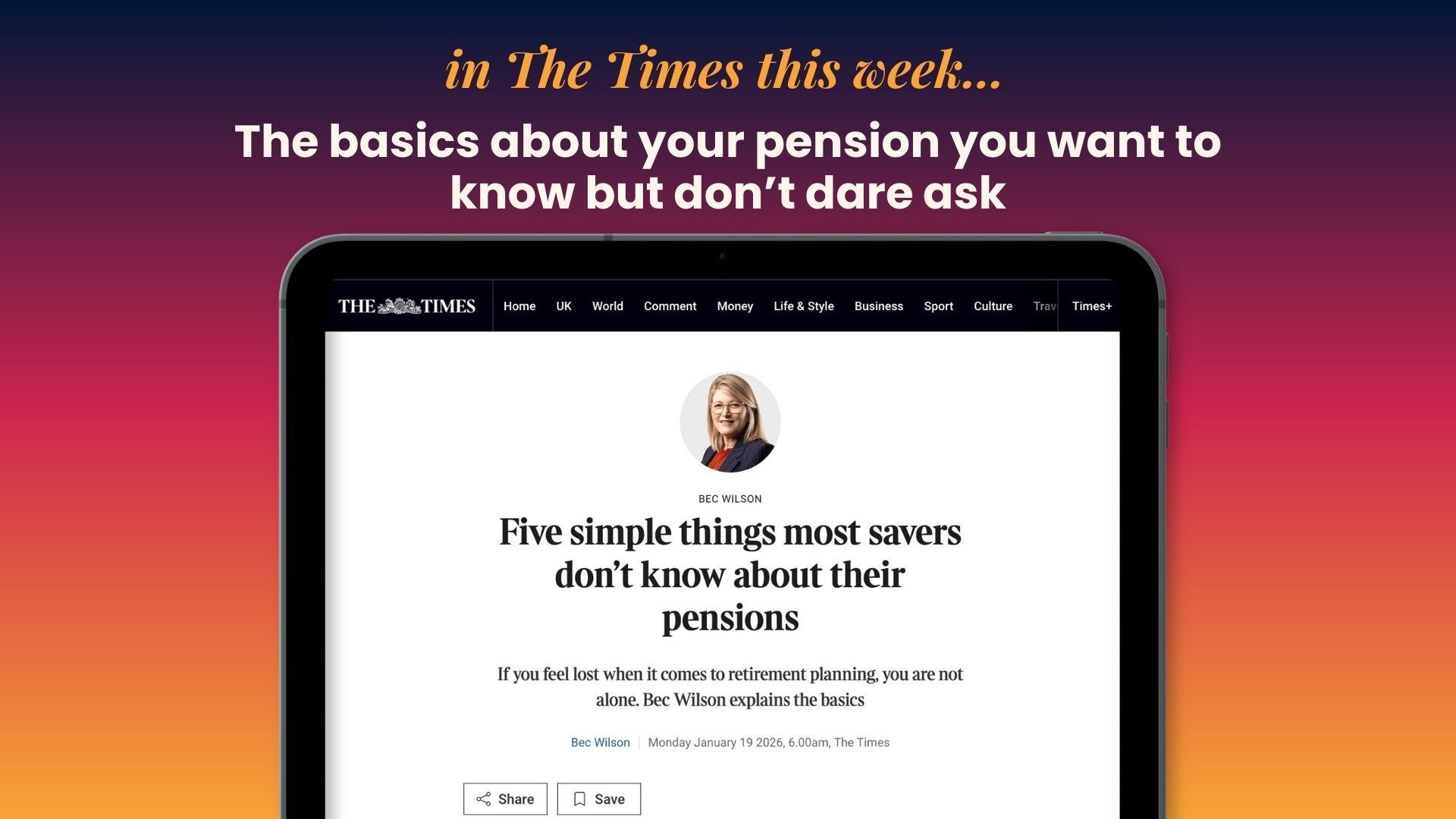
Five simple things most savers don’t know about their pensions
If you feel lost when it comes to retirement planning, you are not alone. Bec Wilson explains the basics
I know this is The Times, and most readers here are smart, savvy and financially literate in their professional lives. But one thing I’ve learnt, after years of talking to people on the street and in boardrooms, is that pensions are still a mystery to far more people than you might expect.
In fact some of the most impressive, high-achieving people I know have quietly sidled up to me at parties to ask questions about their pension that surprise me in their simplicity. Not because they’re foolish but because no one ever really taught them the basics. And because pensions are one of those topics people feel they should already understand, many are reluctant to ask for fear of looking ignorant.
This article was published in digital on Monday January 19, in The Times and will be in the print edition this week. You can read it here.

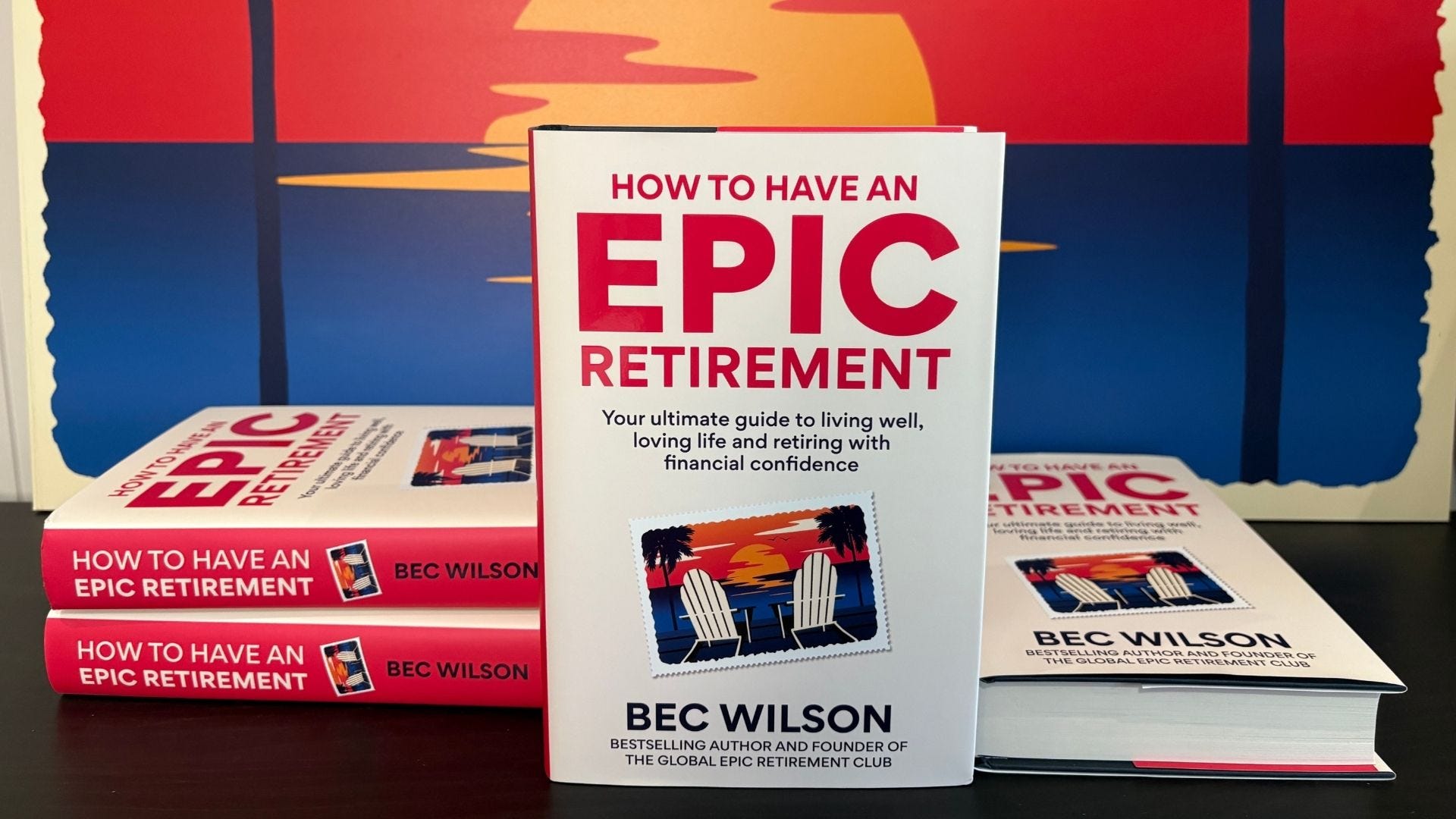
Get your copy of the new UK Bestselling pre-retirement guidebook, How to Have an Epic Retirement: Your ultimate guide to living well, loving life and retiring with financial confidence.
I have been self learning
on pensions from a range of sources for years, and we are retiring just after Easter (me 56 wife 55). The one area I have found which there is little support for is DIY cash flow planning. The main tools (eg Timeline and Voyant) seem to be reserved for Financial Advisors. A couple of IFAs on YouTube have courses where you can buy licenses with some instruction videos, but broadly the cash flow planning tools to support unadvised drawdown are just not there in the market for the average DIY drawdown retiree. This worries me, as I see a lot of ‘gung ho’ views on the Early Retirement Facebook group where people encourage others to retire early when they don’t have a good plan, poor understanding of sequence of returns risk etc. I would like to see pension providers give access to drawdown tools, so that when a drawdown is started, people can be encouraged to put in their layers of income to see if they have a high risk of outliving their DC fund.
So maybe cash flow planning is a topic for an article / newsletter?
Thanks
Simon Apperley