

The five financial decisions that matter most in the last 10 years before retirement
And, in The Times: "Please stop fiddling with our pensions"
What’s in the newsletter?
Feature: The five financial decisions that matter most in the last 10 years before retirement
From Bec’s Desk: New UK Facebook Channel to join
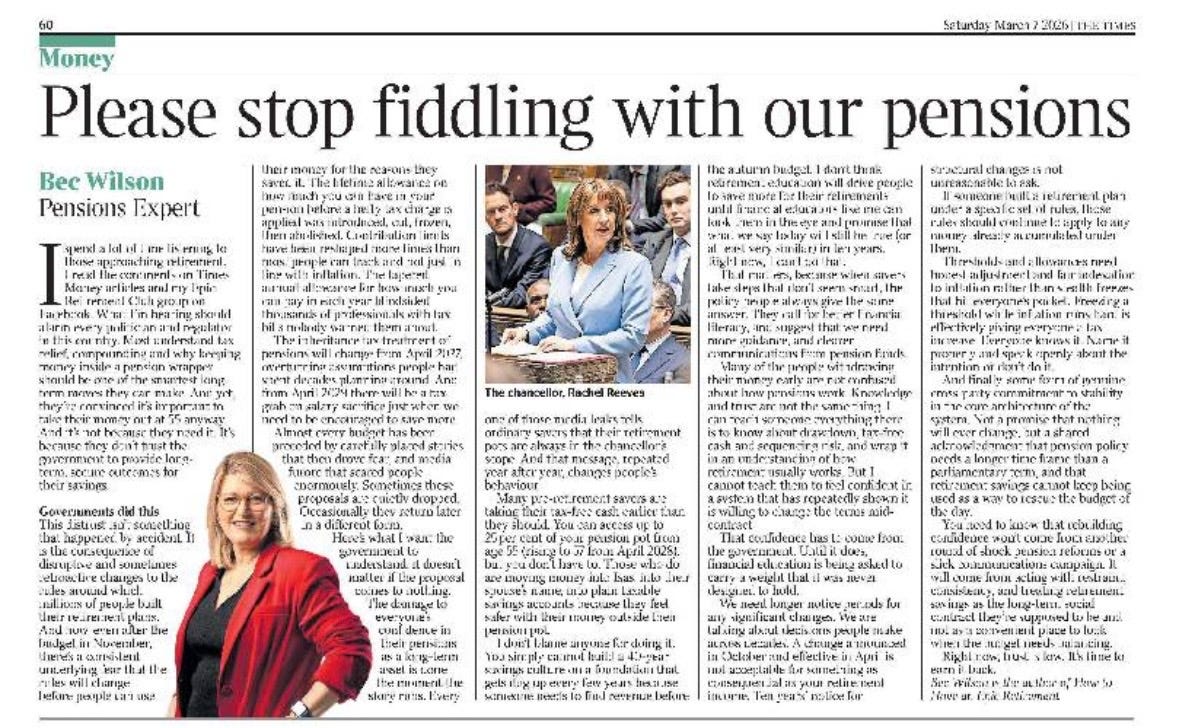
Read my article in The Times: What I’ve heard should alarm every politician in the country - Please stop fiddling with our pensions

The five financial decisions that matter most in the last 10 years before retirement

One of the things I’ve noticed over the years is that retirement planning doesn’t happen evenly across your life.
For most people, the decisions that really shape retirement happen in the final decade before you stop working.
Your mid-50s to mid-60s are a powerful financial window. Earnings are often at their peak, mortgages are shrinking, children may have left home, and for the first time many people have real capacity to focus on their own future.
It’s also the point where retirement stops being an abstract idea and starts becoming real. And when that happens, a handful of financial decisions suddenly matter a lot more than the rest.
Here are five that I see make the biggest difference.
1. What to do about the mortgage
Many people arrive in their 50s still carrying some housing debt. That’s become increasingly common in the UK. The key question is not whether that’s “good” or “bad”, but how you plan to deal with it before retirement.
Some people focus on clearing the mortgage completely before they stop working. Others plan to downsize later and release equity that way. Either approach can work. What matters is that the decision is deliberate, not accidental
Housing costs are one of the biggest factors in retirement spending.
2. How much to boost your pension contributions
The final decade before retirement is often the most powerful time to increase pension savings.
In the UK, workplace pensions and personal pensions benefit from tax relief, which means every extra pound you contribute can be boosted by the government. Many people underestimate how much difference even a few years of increased contributions can make. If earnings are strong in your 50s and early 60s, this period can significantly lift your eventual retirement income.
3. How much investment risk to take
As retirement gets closer, many people instinctively move their pensions into lower-risk investments. That can make sense in some situations, particularly if money will be needed soon.
But retirement today can easily last 25 or 30 years, and your pension may still need to grow for decades. The challenge is finding the balance between protecting what you’ve built and maintaining enough growth to support a long retirement.
4. Whether to gradually reduce work
One of the biggest changes in retirement over the past decade is that more people are easing out of full-time work rather than stopping suddenly. Part-time work, consulting, seasonal work or a small business can make a big difference.
Financially it reduces the pressure on savings. Psychologically it also makes the transition easier. Retirement is increasingly becoming a phased process rather than a single date.
5. How your retirement income will actually work
This is where many people have their biggest “light-bulb moment”.
Retirement income rarely comes from just one place. For many UK retirees it becomes a combination of State Pension, workplace or personal pensions, savings or ISAs, and sometimes part-time work.
But there’s another layer to this that people often overlook.
Not all pensions are created equal.
Over the past decade millions of people have been automatically enrolled into workplace pensions, which is a very good thing. But the quality of those schemes can vary enormously. Some have excellent low-cost investment options and well-designed default funds. Others are expensive, limited, or poorly invested.
In the final years before retirement it’s worth taking a proper look at the pension schemes you actually have, what they’re invested in, how those returns are really tracking, and what the fees and benefits look like. Sometimes consolidating old pensions or reviewing the default investment option can make a meaningful difference over time.
But it’s important not to rush this. Make sure you properly understand each scheme and the terms you’re offered before moving anything, particularly if there are guarantees or defined benefit elements involved.
Once people start mapping out where their income will come from and how those pieces fit together, retirement often feels much less uncertain.
And that’s really the goal.
I cover a lot more on this in How to Have an Epic Retirement, my UK Bestseller (An Australian/New Zealand edition is also available)

This week I’m going to be short and sweet. I’ve been based in Australia but doing meetings with the UK almost every night!
The UK course is coming along brilliantly. It will be available for pilot very soon - so if you’re curious register your interest and we’ll let you know first.
We’re also gearing up to launch a UK podcast. Shhh. don’t tell anyone. But watch this space.
And finally, my column in The Times (below) this week was in direct response to the feedback I keep getting about planning for retirement in the UK. It’s often less about planning long term moves and more about taking caution against changes which I think is a challenge that needs a voice.
Lastly, I’ve been playing around with one of the new features on Facebook. If you’re over there, you might have noticed I’ve launched two new Channels.
These are a bit like a behind-the-scenes feed where I can share quick ideas, short insights and the occasional thought that doesn’t quite warrant a full article or podcast.
One is focused on Australian epic retirement stuff that come up during the week. The other is for UK epic retirement stuff, as that audience has been growing quickly with the UK edition of the book and course.
The nice thing about these Channels is that they’re a direct way for me to share snippets, short videos and posts with geographically specific audiences, without relying on the Facebook algorithm to decide who sees them.
They’re informal, quick to read, and a way for me to share things in real time rather than waiting for the next newsletter. I’ll be sharing all my educational reels there too.
If you’d like to follow along, you can join them here:
Australian Channel: click here
UK Channel: click here
See you in there.
Until next week - make it epic!
Cheers
Bec xx
.

Author, podcast host, columnist, retirement educator, and guest speaker

What I’ve heard should alarm every politician in the country
In an open letter to the government, Times Money’s retirement columnist sets out why people aren’t saving like they should
I spend a lot of time listening to people who are approaching retirement. And I don’t mean through polished focus group responses. I read the unfiltered commentary in places such as the Times comments section on Money articles and my Epic Retirement Club group on Facebook. Both are where financially savvy and less-savvy pre-retirees are discussing everything they’ve read about what’s coming for their money and their life ahead of them.
What I’m hearing should alarm every politician and regulator in this country. And it’s time we talked about it.
The more savvy people are not confused. Most understand tax relief, compounding and why keeping money inside a pension wrapper should be one of the smartest long-term moves they can make. And yet, they’re convinced it’s important to take their money out at 55 anyway. And it’s not because they need it. It’s because they don’t trust the government to deliver long-term, secure outcomes for their savings.
Read the rest of this article here in The Times. It was published on Tuesday 3rd March (and in Print on Saturday 7th March 2026). I write fortnightly for The Times - keep an eye out as my next article will drop any day!

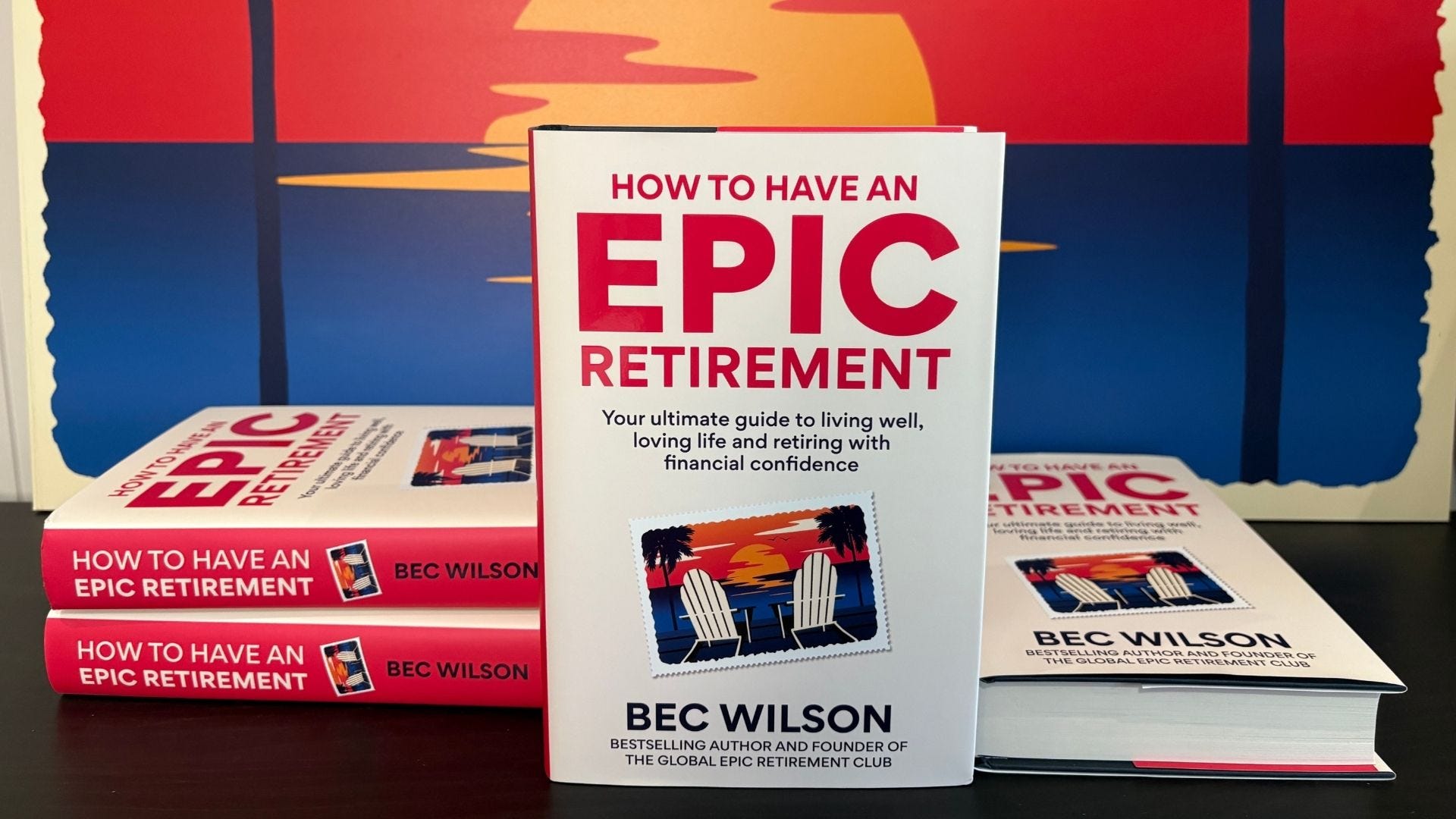
Get your copy of the new UK Bestselling pre-retirement guidebook, How to Have an Epic Retirement: Your ultimate guide to living well, loving life and retiring with financial confidence.
Hi Bec, any chance we could read this article in The Times; it's locked behind a paywall.