

Planning your retirement when one of you is older than the other
And, in The Times: "The six biggest retirement fears - and how to solve them"
What’s in the newsletter?
Feature: When one of you is older than the other
From Bec’s Desk: Trying pickleball and checking out a cruise ship in port
Read my article in The Times: The six biggest retirement fears - and how to solve them

When one of you is older than the other
I got a letter this week that’s more common than you’d think.
“I’m 66 and ready to slow down. My partner is 58 and still working. How do we plan this properly?”
If there’s an age gap between you, you are not running one retirement timeline. You’re running two. And in the UK, that plays out across three things that matter enormously: pension access age, State Pension age, and tax sequencing.
Let’s start with access.
You can usually access defined contribution pensions from age 55, rising to 57 from 2028. That means one partner may be able to start drawdown while the other is still in full earning mode. Used well, this can be powerful. The older partner might reduce hours and draw a modest pension income while the younger partner keeps earning and contributing. But access alone isn’t the strategy. Tax has to be part of the thinking too.
If one partner is still earning £40-60,000 and the other starts drawing heavily from their pension, you can push your household tax bill unnecessarily high. Often the smarter move is for the older partner to draw modestly, use their personal allowance efficiently, and keep withdrawals tax-efficient while the other continues contributing and benefiting from tax relief. Sequencing matters more than most people realise.
Then there’s the State Pension clock.
State Pension age is currently 66 and rising. When one partner reaches it and the other is still years away, you suddenly have uneven guaranteed income. One of you has a secure, inflation-linked income for life. The other doesn’t yet. That asymmetry can actually shape your investment decisions. It might allow the older partner to take slightly more risk with their drawdown pot, knowing the State Pension provides a floor. Or it might encourage you both to protect capital until the second State Pension is in place.
Either way, it’s a factor worth mapping deliberately rather than discovering by accident.
Now for the part no spreadsheet captures.
When one partner retires and the other keeps working, you’re living in different life stages under the same roof. One has freedom. One has Monday morning meetings. One wants midweek lunches with their mates; the other has deliverables due and limited annual leave. I’ve seen couples navigate this beautifully. I’ve also seen them assume travel and lifestyle begin the moment the first person finishes work, only to find the other isn’t ready, isn’t available, or simply doesn’t want to stop yet.
You are not one age. You are two. Which means your retirement plan rarely fits a single date circled on a calendar. It usually needs to be phased.
Phase one: the older partner reduces or stops work.
Phase two: the younger partner transitions.
Phase three: you arrive at a shared lifestyle. That’s the shape of it financially. But getting there requires honest conversation well before you reach any of those phases.
And then there’s longevity.
If there’s a significant age gap, one partner may statistically need care earlier. And/or the other partner might become the carer. That shapes housing decisions, drawdown rates, and whether you preserve certain assets for later-life flexibility. You’re effectively managing five clocks simultaneously: pension access age, State Pension age, earnings and tax bands, the end of work identity, and your health trajectories. That can be a lot!
Mapped consciously, an age gap can create real flexibility. Ignored, it creates stress and missed opportunity.
The question isn’t just when do we retire?
It’s what does each stage look like for each of us, and how do we keep both people’s goals in the picture?
That’s where the real planning starts.
Relate to this? Tell me what you’ve learned.
I cover a lot more on this in How to Have an Epic Retirement, my UK Bestseller (and Australian/New Zealand)

I’ve been home in Brisbane this week, and it’s been a good one.
Alongside the podcasts, courses and keeping up my gym habit, I managed to squeeze in two things I hadn’t expected: a tour of a Viking Ocean cruise ship that came into port, and my very first pickleball lesson.
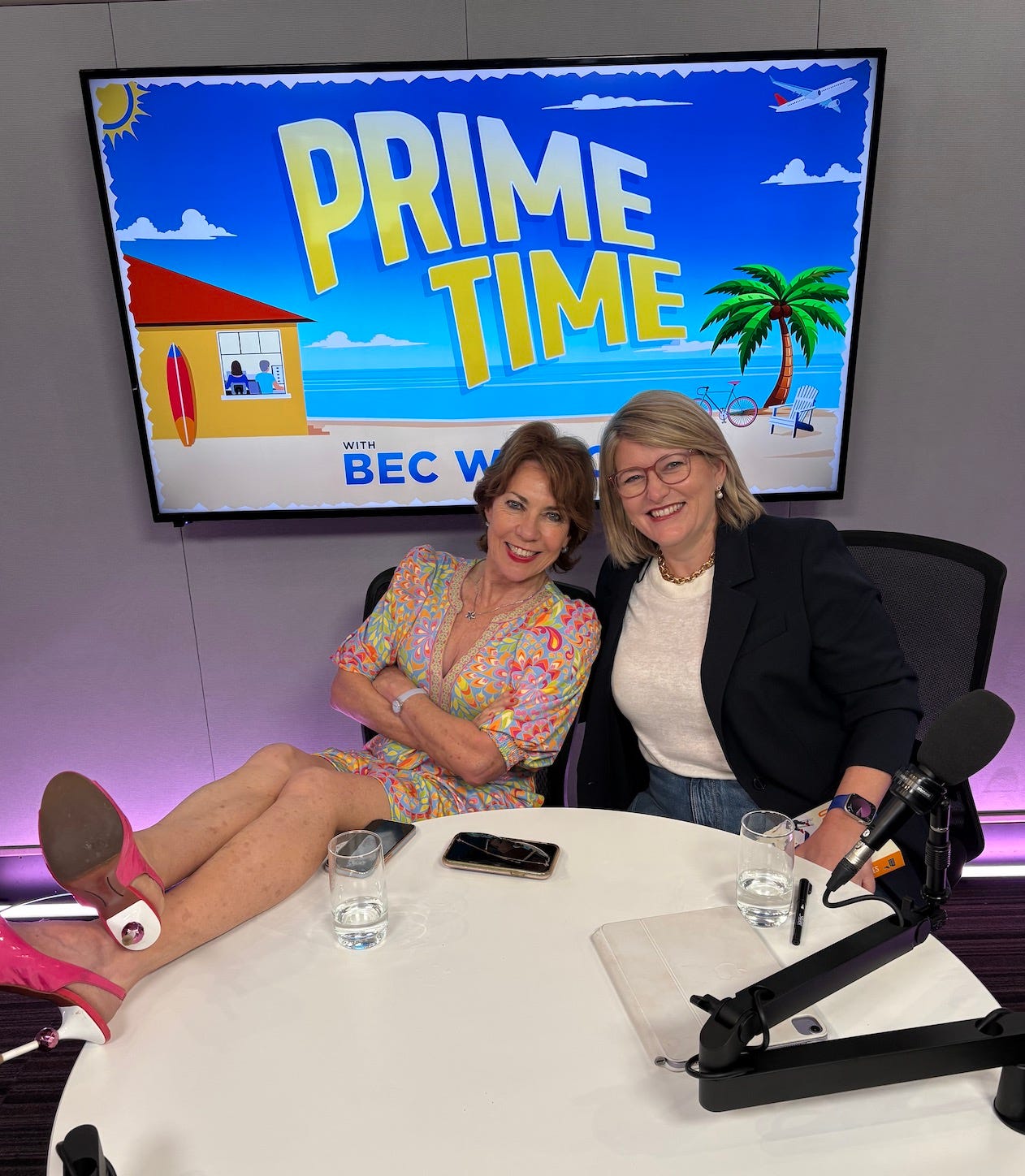
The cruise ship visit coincided with a podcast I released with the wonderful Kathy Lette. Yes, the Kathy Lette — author of Puberty Blues and her latest bestseller The Sisterhood Rules. As a travel writer for The Times she’s taken many Viking cruises, so she came in to share what the experience is really like, and the real differences between river and ocean cruising. It was a great conversation.
Between the show and the ship tour, I picked up a few things that regular cruisers probably already know, but most of us don’t until we’ve actually done one:
Every ocean cabin has a balcony. All food and non-alcoholic drinks are included, so no nasty surprise bills at the end. Wine, beer and cocktails are available through a very reasonable drinks package, and it’s not bottom-shelf. You can also bring your own wine onboard with no corkage, which sounds particularly wonderful on a river cruise through a French wine region. Free internet across the fleet. A Nordic spa open to all guests, with sauna, hot pool, snow room and proper loungers. A big, modern gym. Ocean ships carry 998 passengers compared to around 190 on a river cruise, so it feels genuinely spacious. Room service is included. And with 110 ships, Viking is now the largest river cruise operator in the world.
There are more highlights over on my Facebook post if you want a closer look.
Then came pickleball. I did my introductory lesson on Saturday and I completely understand the fuss now. It’s easy to pick up, the courts are half the size of tennis, and once you’ve done your intro session you can find a game near you through an app for just a few pounds. It’s apparently wildly addictive, and I can already see why. It’s taken off in Australia and the US, and I know it’s growing fast in the UK too. If you haven’t tried it, it might be worth a look, especially if you’re after something social, active and genuinely fun.
And if you’re in the UK, don’t forget to pick up a copy of How to Have an Epic Retirement. It’s currently available in hardcover, and you can get a copy here.
Until next week — make it Epic.
Cheers,
Bec xx

Author, podcast host, columnist, retirement educator, and guest speaker

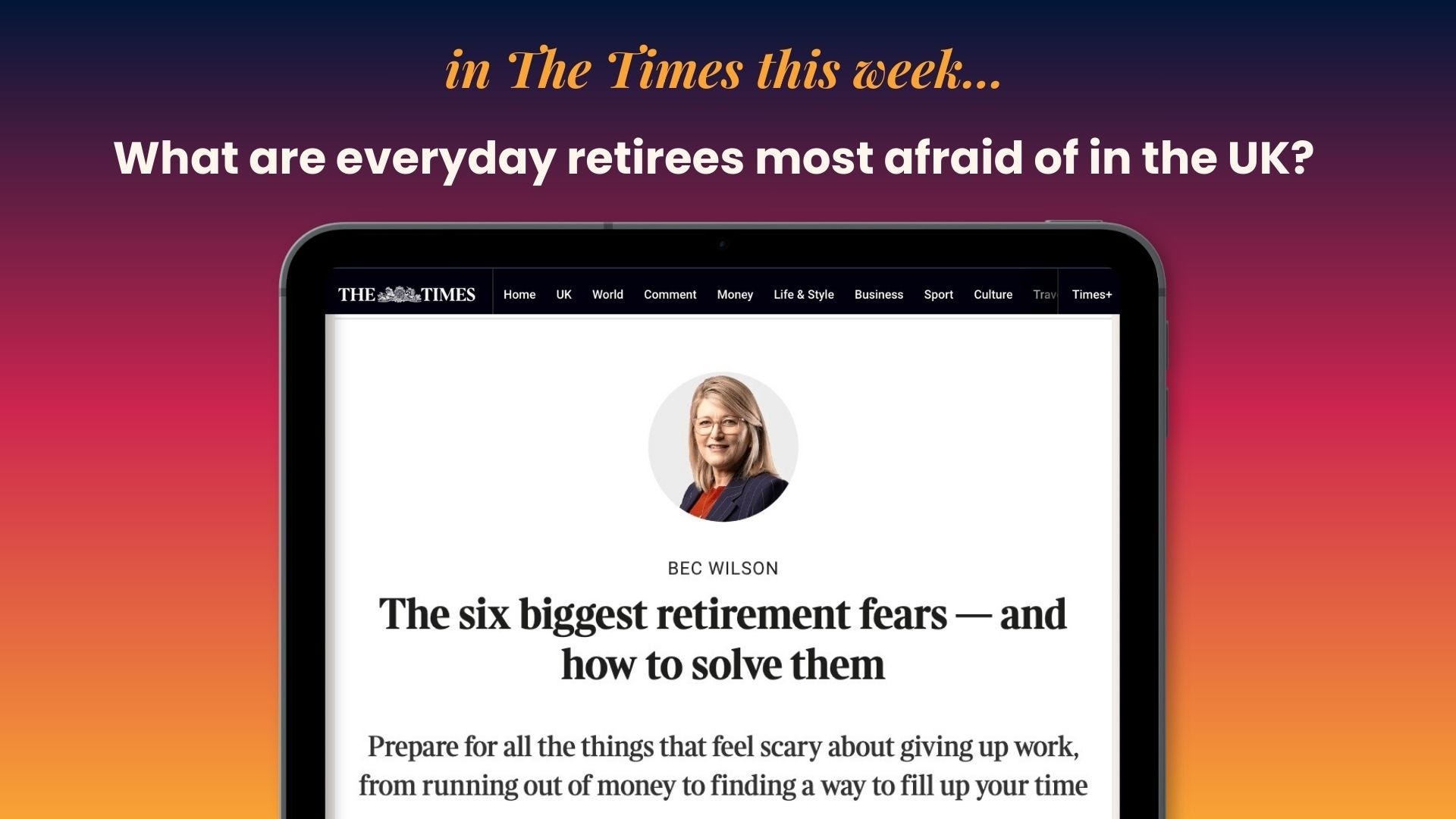
The six biggest retirement fears - and how to solve them
What are you most afraid of as you approach retirement?,” I asked my Facebook community, The Epic Retirement Club, a group of people who are mainly in their fifties and sixties.
The answers poured in. What stood out was how similar the worries were, regardless of background or income.
Running out of money, working for too long and never enjoying life, not knowing how to stop saving and start spending, losing your sense of purpose and identity and the government unfairly changing the rules on pensions and savings: all these things are big worries for anyone thinking about retiring soon. Then there’s one we don’t talk about — ending up alone, lonely and isolated socially.
So today I want to look more deeply at six of the biggest fears, and understand how they can be managed.
Read the rest of this article here in The Times. It was published on Monday 16th February 2026. I write fortnightly for The Times - keep an eye out as my next article will drop any day!

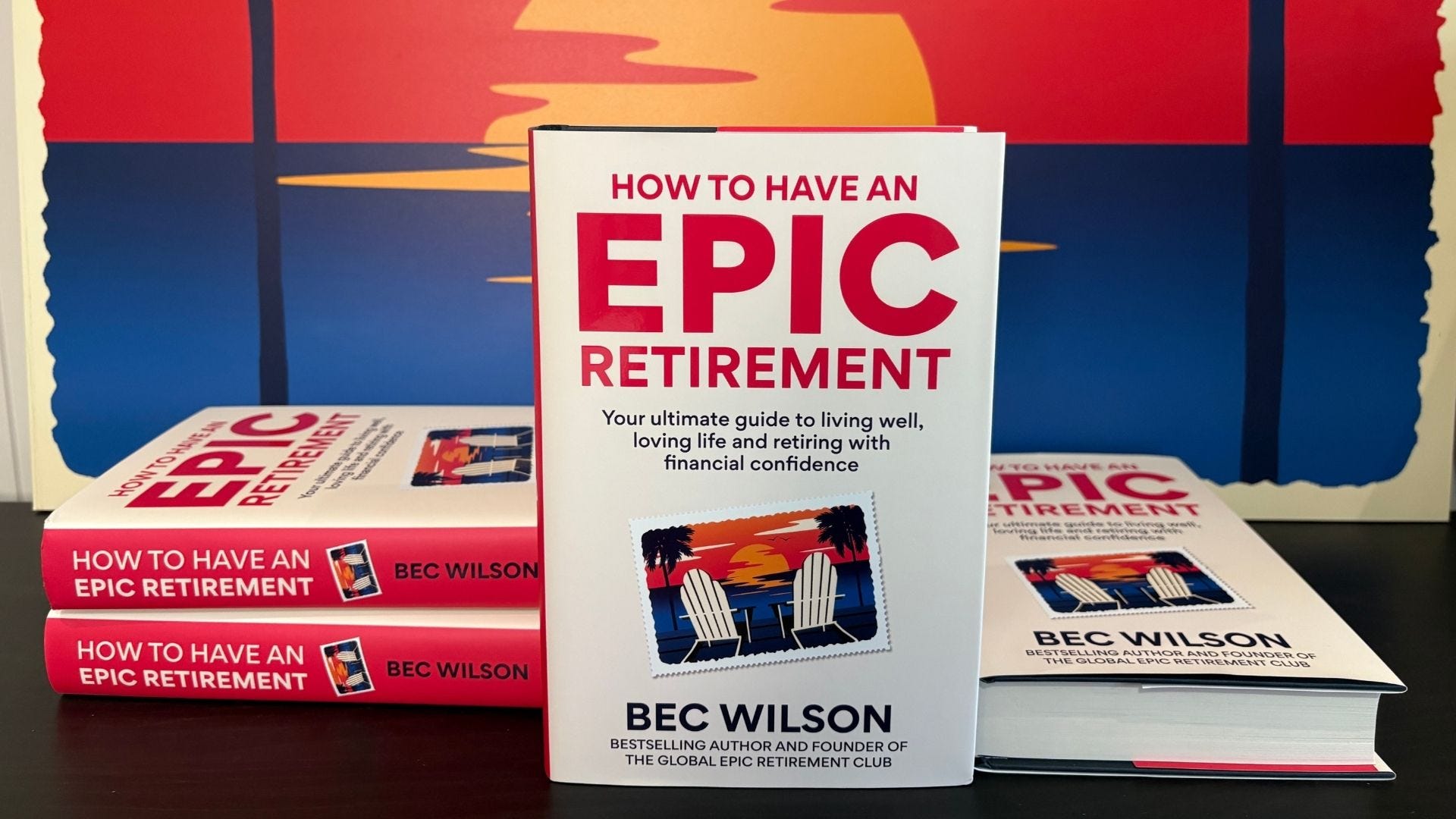
Get your copy of the new UK Bestselling pre-retirement guidebook, How to Have an Epic Retirement: Your ultimate guide to living well, loving life and retiring with financial confidence.
wife is 10 years younger than me. I retired 8 months ago and she intends to work for another 3 years or so. Biggest issue has been restricted travel plans. I go to my gym most days even though I have a great home gym which I use for top up. I do have the odd lunch or so with other retired mates and go on trips with my 2 brothers ( straight out of Last of the Summer Wine!!). I keep in touch with my adult sons who both live reasonably close.
But the biggest reconciler is that I am trying to make it as a self published author (historical fantasy) so it means I still spend time at my desk (although constant dictation keeps me on the move). This almost looks like a job so it works well (but is much more fun than a proper job). Signing up to be a film and TV extra as that looks like fun too. Finally I actively manage my investments and that takes time too. This will all help fill out the gap in this “peri-retirement“ before my wife also stops working
You've missed out a couple of really important variables. One of them is caring responsibilities. This can mean one partner retiring quite early to look after perhaps an elderly parent or even two other parents or a disabled child. Another variable is the opportunity for some people in some kinds of jobs to take an early retirement package, which I did at 52, mainly to look after my son who's got a learning disability. This enabled me to draw carers allowance and also to work part-time, which meant that I was actually earning more as a part-time worker and I had been in full-time work. It gave me a lot of flexibility. But as it happens, my partner was actually older than me. She quite enjoyed her job, so she kept on working for an extra five years past the state pensionable age, which she was entitled to do, building up in the meantime a very significant additional benefit. In those days, it was 11% for each year that you carried on working and didn't draw your pension. Unfortunately, that's since dropped to about 6%.