

Learning to spend after a lifetime of saving
For forty years we’re taught to watch our balances rise. Bank accounts, super, pensions - they’re all meant to go up. Then you get to retirement and it all changes.

What’s in the newsletter?
Feature: Learning to spend after a lifetime of saving
From Bec’s Desk: Hello from London

Learning to spend after a lifetime of saving
For forty years we’re taught to watch our balances rise. Bank accounts, super, pensions - they’re all meant to go up. That’s the scoreboard of doing life well. That’s how you know you’re being sensible, responsible, grown-up. Bigger pension pots of juicy ISAs, compound growth!
Over many years, you learn to feel calmer when the numbers go up. You sleep better. You tell yourself you’re building security, protecting your future, being a good parent, a good partner, and a good adult.
Then you get to retirement.
And even the most capable, well-planned people feel a hefty jolt of discomfort as they have to start drawing down, and they watch the numbers start to go the other way. Some say it feels like a tightening in the chest. Others, a sense that something isn’t right. It feels like you’re doing something you were never meant to do.
You can know, intellectually, that your retirement plan works. You can have spreadsheets, projections, buffers and even a financial adviser telling you it’ll be ok. And still feel a flicker of guilt every time you draw money out. It’s as if you’re being careless. As if you’re letting your younger, harder-working self down by dipping into this pot to do things that go beyond spending on the basic cost of living.
But we have to remember, that’s what it’s been built for.
The guilt and discomfort people feel when spending in retirement is a widespread issue. And if it’s happening to you, you’re normal.
What’s actually going on here isn’t a money problem. It’s a conditioning problem.
For decades, your nervous system has been trained to associate not spending with safety. Saving became a form of control. Restraint was rewarded. Watching balances rise meant you were doing the right thing, protecting the future, being prudent.
So when retirement flips the system from accumulation to drawdown, your brain doesn’t calmly update the rules. It flags ‘danger, danger, danger’. It treats spending as a threat, even when it’s planned and affordable.
That’s why reassuring yourself doesn’t always work. More spreadsheets don’t fix it (but they’re important). Neither does being told, again, that “you’ll be fine”. Your brain isn’t confused about the maths. It’s reacting to a lifetime of habit.
There’s also a second layer to this. For most people, money has always flowed in one direction: work first, enjoyment later. Spending was delayed, justified, or rationed. In retirement, that sequence reverses. You’re being asked to enjoy first, without the psychological permission slip of having “earned it this month”.
That’s a big shift. And it’s why so many people hover in an uncomfortable middle ground. Retired on paper, but still living emotionally like they’re preparing for it.
So what actually helps?
First, you need to change how the money shows up in your life.
It’s not just about how much you have, but how you experience it. People almost always feel better spending “income” that has been designated as an income stream, than dipping into a lump sum. So, acknowledge this and consider setting up a regular transfer into a spending account that allows for both your cost of living and annual discretionary spending. This can be surprisingly powerful. It restores a sense of rhythm and legitimacy to what you can do. You’re not eroding an important savings pot every time you spend. You’re using money that’s been allocated for living life well.
Second, decide your spending rules in advance.
Most guilt doesn’t come from spending. It comes from impulse decision-making in the moment. If every purchase requires a judgement call about whether you’re being sensible, of course it feels uncomfortable to spend on joyous things. So, to get around this you can simply agree on a level of spending ahead of time, ideally when you’re calm and rational. Then let yourself spend within it without renegotiating every coffee, dinner, or plane ticket.
Third, recognise that some spending has a timing window.
Health, energy, mobility and curiosity are not evenly distributed across your retirement years. Some experiences are easier, richer, or only possible earlier on in life. And, if you delay all of your discretionary spending in the name of safety, you may end up protecting money you can’t fully use in the way you once imagined. Heck - you or your partner might even die, or lose mobility before you get to enjoy it if you’re not careful.
None of this is about being reckless. It’s about aligning your spending with the reality of this phase of life. Learning to spend after forty years of saving is not a moral failure or something to feel guilty about. It’s simply another transition. One most people were never prepared for.
But, if you can notice the feelings, understand your capacity to spend, and get ahead of the guilt, you can adapt.
This week’s challenge isn’t to spend more. It’s to stop reflexively telling yourself you can’t, and work out what you actually can afford.
And, if you need a little help, get yourself a copy of my book, How to Have an Epic Retirement. It’s an Amazon bestseller in the UK.

I’m writing this from London, where I’ve been based for the past week, moving between meetings with UK pension funds and recording the very first UK edition of the Epic Retirement Flagship Course.
It’s been a great week and there’s another one ahead. Insightful, energising, and if I’m honest, just about long enough to remind me that living out of a suitcase and a small hotel, bustling through The Tube in the bitter wet cold by day is tough stuff (and kudos to you all for doing it!). I head back to Australia and the hot weather in a few days, but before I do, I wanted to share one important piece of news.
This week, we officially welcomed Charlotte Gibson as the UK Lead of the Epic Retirement Institute. So that means - we’re doing it. The Epic Retirement Courses, education and support is fully rolling out, and getting more and more tailored for the UK.
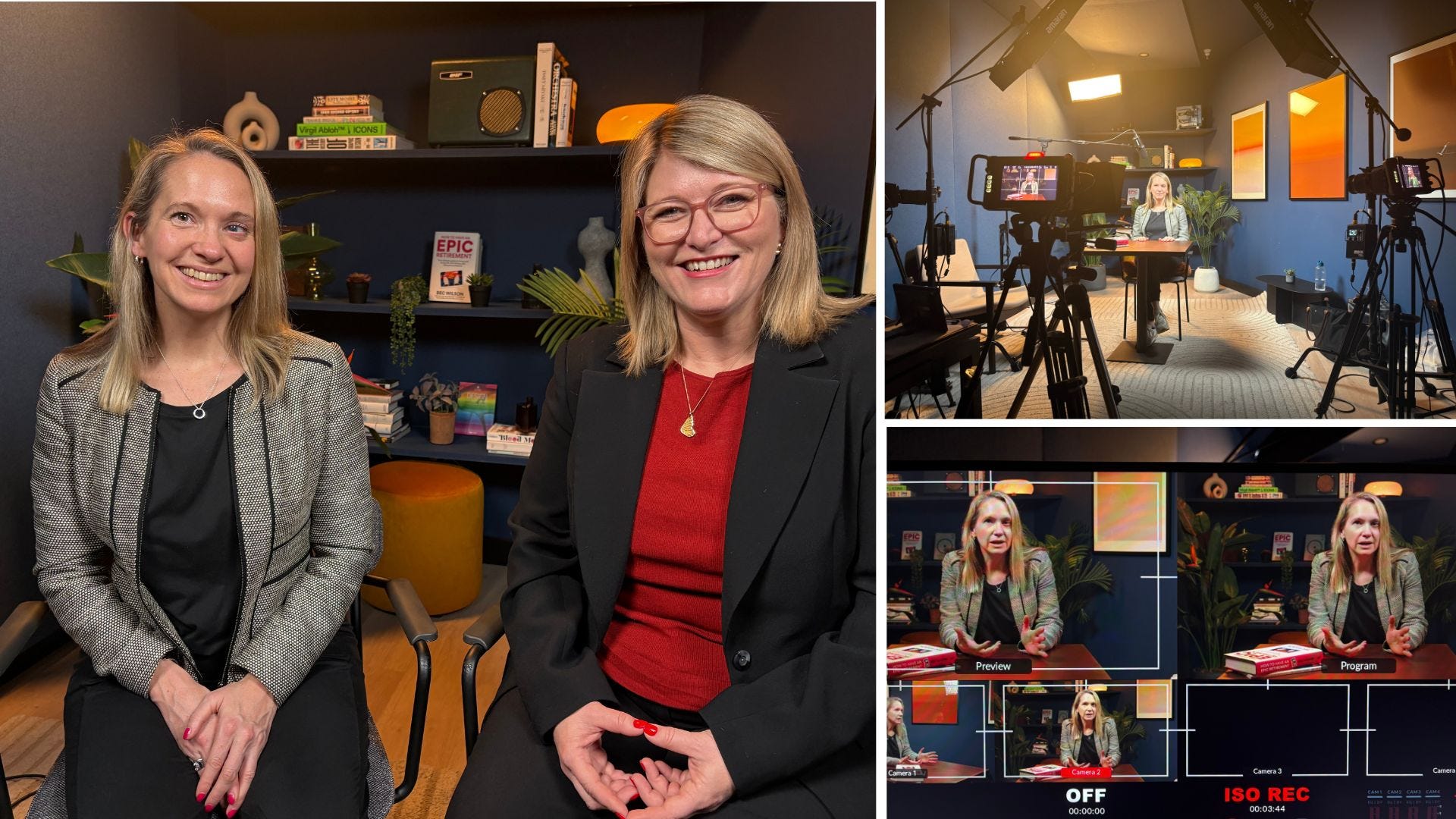
Working across Australia and the UK in retirement education was always going to be complex, particularly with me based on the other side of the world. The systems are different (though often surprisingly similar). The emotional relationship people have with money and ageing isn’t quite the same. And practically speaking, it’s a long way to travel for a meeting to be on the same timezone.
So finding the right person to help lead this work in the UK really mattered. I still plan to be here very regularly - but Charlotte is here all the time!
Charlotte is a rare combination. She’s both a pensions actuary and a retirement coach, which means she understands the technical detail of the system deeply, but also understands the very human experience of approaching and living through retirement. She brings rigour without dryness, and warmth without fluff. I’m genuinely delighted to be working with her as we build the UK side of this work properly and thoughtfully.
This year already feels like an important one for retirement.
Possibly the biggest year of retirements we’ve ever seen.
And the book is out there to help people in the UK navigate it now. I’ve seen it on the shelves this week and visited with my publisher in London too. If you haven’t got a copy yet - now’s a great time. You can order it in any Waterstones (or any other bookstore), or easily get a copy on Amazon, delivered quickly. Order here.

It’s the ultimate guidebook for retirement. Enormously comprehensive. So comprehensive in fact that it goes far beyond the financial lessons, and more deeply addresses:
time and longevity (or how long you might live and how to use that to plan),
how you build your financial confidence for retirement ( the actual money and pension info you need and the important lessons on spending, drawdown and building your retirement paycheck too)
your health and how to age better
your happiness and sense of purpose in retirement
travel - and how to get amazing deals and enormous fulfilment in retirement
And finally, your home as you age - and preparing to be prepared for how that works
I’m not a boring financial writer (or I very much try not to be). I focus on all the facets of retirement - financial and non-financial. I’m on your team, trying to help you weed out what’s important and get that done, and not get tricked down any rabbit holes! Again - you can order it on Amazon here.
The book is the textbook for our new How to Have an Epic Retirement Flagship Course for the UK too, which we will launch in April/May in the UK. We’ll be running the first 6-week program as a pilot at a special discount price. You can register your interest (no obligation) to find out more here. Charlotte and I will be your educators.
One final UK-specific note. I’m now writing a regular retirement column for The Times. The next one should be out this weekend - or within days - so keep an eye out here.
As always, thank you for being here and for your continued support.
Cheers - Bec Xx

Author, podcast host, columnist, retirement educator, and guest speaker
Get your copy of the new UK Bestselling pre-retirement guidebook, How to Have an Epic Retirement: Your ultimate guide to living well, loving life and retiring with financial confidence.