

‘Get some financial advice’ they say, but it’s just not that simple anymore
And, in The Times this week: "The six biggest retirement fears - and how to solve them"
What’s in the newsletter?
Feature: ‘Get some financial advice’ - it’s just not that simple anymore
From Bec’s Desk: Making the course
Read my article in The Times: The six biggest retirement fears - and how to solve them

‘Get some financial advice’ - it’s just not that simple anymore
“Get some financial advice” is probably the most common line in UK retirement commentary. Whenever markets wobble, pension freedoms are debated, tax allowances shift, someone asks how they are meant to move from full-time work into retirement, or someone talks about inheritance tax, the default response is the same: go and get regulated financial advice.
I have said it myself.
It isn’t wrong. But I am beginning to think it is incomplete.
A more responsible version might be this: learn how the system works first, and then seek out the type of advice that fits your situation and your goals.
That nuance matters.
In the UK, “financial advice” is not a single, uniform service. Some advisers are independent and can recommend from across the market. Some are restricted to certain providers or investment solutions. Others sit within large firms that combine advice and investment management under one structure. In many cases, the service is built around managing assets for an ongoing percentage fee, which can compound significantly over a long retirement.
For some households, that structure is entirely appropriate. If you have significant assets, complex tax considerations, business interests or intergenerational planning needs, comprehensive ongoing advice can be valuable.
But many people approaching retirement are trying to answer very specific questions.
Can I afford to stop working?
Which workplace pension should I consolidate to and how do I analyse their benefits?
Should I take tax-free cash now or later?
Drawdown or annuity?
How does this interact with the State Pension?
What happens if markets fall in the first five years?
How long does this money realistically need to last?
Those are retirement design questions.
They are not automatically investment management questions.
A significant number of people already sit in solid workplace pension schemes or SIPPs with diversified, low-cost funds. The investment wrapper itself is not always the core problem. The challenge is understanding sequencing risk, tax planning, income sustainability and how all the pieces fit together.
Yet the most common commercial advice model in the UK remains ongoing portfolio management for a percentage fee. That does not make advisers conflicted or unethical. It simply means the service is built around managing assets over time.
If you do not understand how advice is delivered and paid for, it is very difficult to assess whether what is being offered genuinely matches what you need.
We have created a culture where “get advice” is the responsible answer to every retirement question. But advice is expensive, adviser numbers have fallen sharply over the past decade, and access is uneven. For many households, it is neither simple nor cheap.
If people are going to be encouraged to seek advice, they deserve a clearer map of what is actually on offer and how each type is paid for, so they can judge whether it suits them. Firms, in turn, benefit from being explicit about the structure of their service and the circumstances it is designed for.
Without that understanding, it becomes difficult to tell whether the recommendation is solving your problem — or simply the way that firm structures its advice.
Advice matters. But it should be chosen deliberately, with a clear understanding of what problem you are trying to solve.
And that begins with education.
So let’s learn the big types:
There is guidance — such as Pension Wise or provider helplines — which explains your options but does not recommend a specific course of action. Then there is regulated financial advice, where an adviser makes a personal recommendation based on your circumstances.
The UK is also trying to create a middle ground between guidance and full advice called targeted support. It’s expected to arrive in late 2026 or 2027. Whether it becomes a genuine bridge for middle-income households, or simply a structured sales funnel, will depend on how it is implemented.
Among regulated advisers, some are independent and can consider the whole market. Others are restricted to certain providers or operate within vertically integrated firms that combine advice and investment management. That structure often involves moving assets into centrally managed portfolios and charging an ongoing percentage fee.
Those ongoing charges typically sit somewhere between 0.5% and 1% per year for advice, sometimes layered on top of platform and fund costs which can creep towards 2% in total. Over a 20–30 year retirement, that compounds into a very significant sum. When you consider that a workplace pension might be costing you 0.25% that’s a big difference.
For some households, the service justifies the cost. For others, particularly those with straightforward arrangements, it may be more than they need.
The important point is not that one model is good and another bad. It is that they are different, and consumers deserve to understand what they are paying for, how it is calculated, and whether that structure suits their circumstances.
This is my view of the world? You might agree or disagree… share your thoughts.
I cover a lot more on this in How to Have an Epic Retirement, my UK Bestseller (and Australian/New Zealand)

Another week closer to the end of the UK financial year, which means it’s time to start thinking about tax planning if you haven’t already.
This week I had a piece published in The Times — a fun one — and I hope you managed to catch it (see it below).
I’ve also spent the week in sunny Melbourne, keynoting a number of events and dialing in to meetings in the UK in my evenings. What I’m noticing now is that my work is starting to split quite neatly across the UK and Australia. The systems are similar in intent but very different in execution, and each country has its own quirks and pressure points.
As we develop the UK edition of the How to Have an Epic Retirement course, I’m getting increasingly excited about what we can offer. We’re deep in scripting, filming and editing, with a 9 May release in sight. It feels good to be building something that genuinely reflects the UK system rather than retrofitting an Australian model.
Australia continues to wrestle with superannuation complexity, pension settings and the tension between advice and investment management models. The UK has its own advice gap, the long tail of pension freedoms, and tax allowances that seem to shift just as people get comfortable with them. Different language, same underlying challenge: helping people make confident decisions in the second half of life.
I love working across both. It keeps me sharp.
And if you’re in the UK, don’t forget to pick up a copy of How to Have an Epic Retirement. It’s currently available in hardcover, and you can get a copy here.
Until next week — make it Epic.
Cheers,
Bec xx

Author, podcast host, columnist, retirement educator, and guest speaker

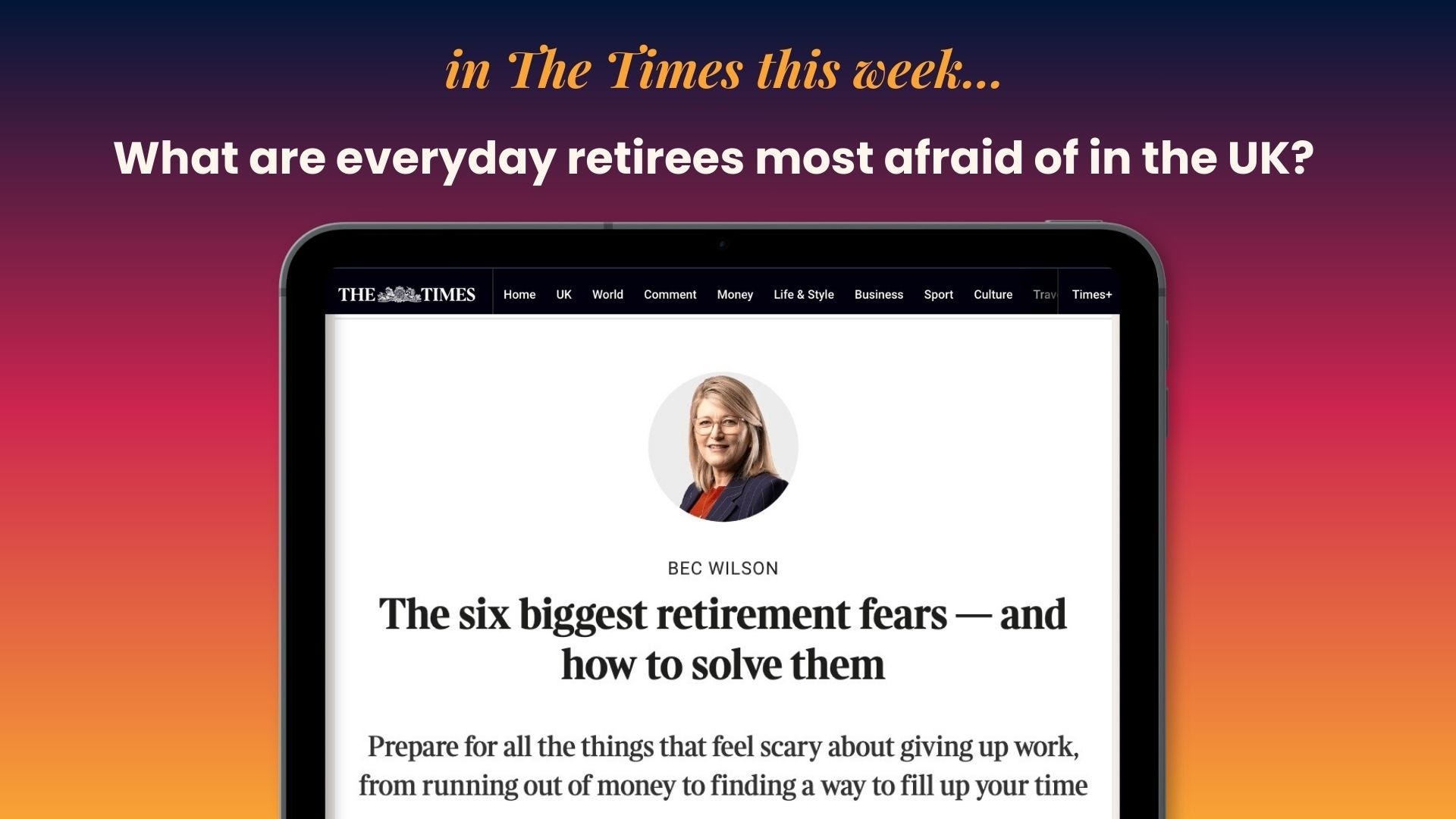
The six biggest retirement fears - and how to solve them
What are you most afraid of as you approach retirement?,” I asked my Facebook community, The Epic Retirement Club, a group of people who are mainly in their fifties and sixties.
The answers poured in. What stood out was how similar the worries were, regardless of background or income.
Running out of money, working for too long and never enjoying life, not knowing how to stop saving and start spending, losing your sense of purpose and identity and the government unfairly changing the rules on pensions and savings: all these things are big worries for anyone thinking about retiring soon. Then there’s one we don’t talk about — ending up alone, lonely and isolated socially.
So today I want to look more deeply at six of the biggest fears, and understand how they can be managed.
Read the rest of this article here in The Times. It was published on Monday 16th February 2026. I write fortnightly for The Times - keep an eye out as my next article will drop any day!

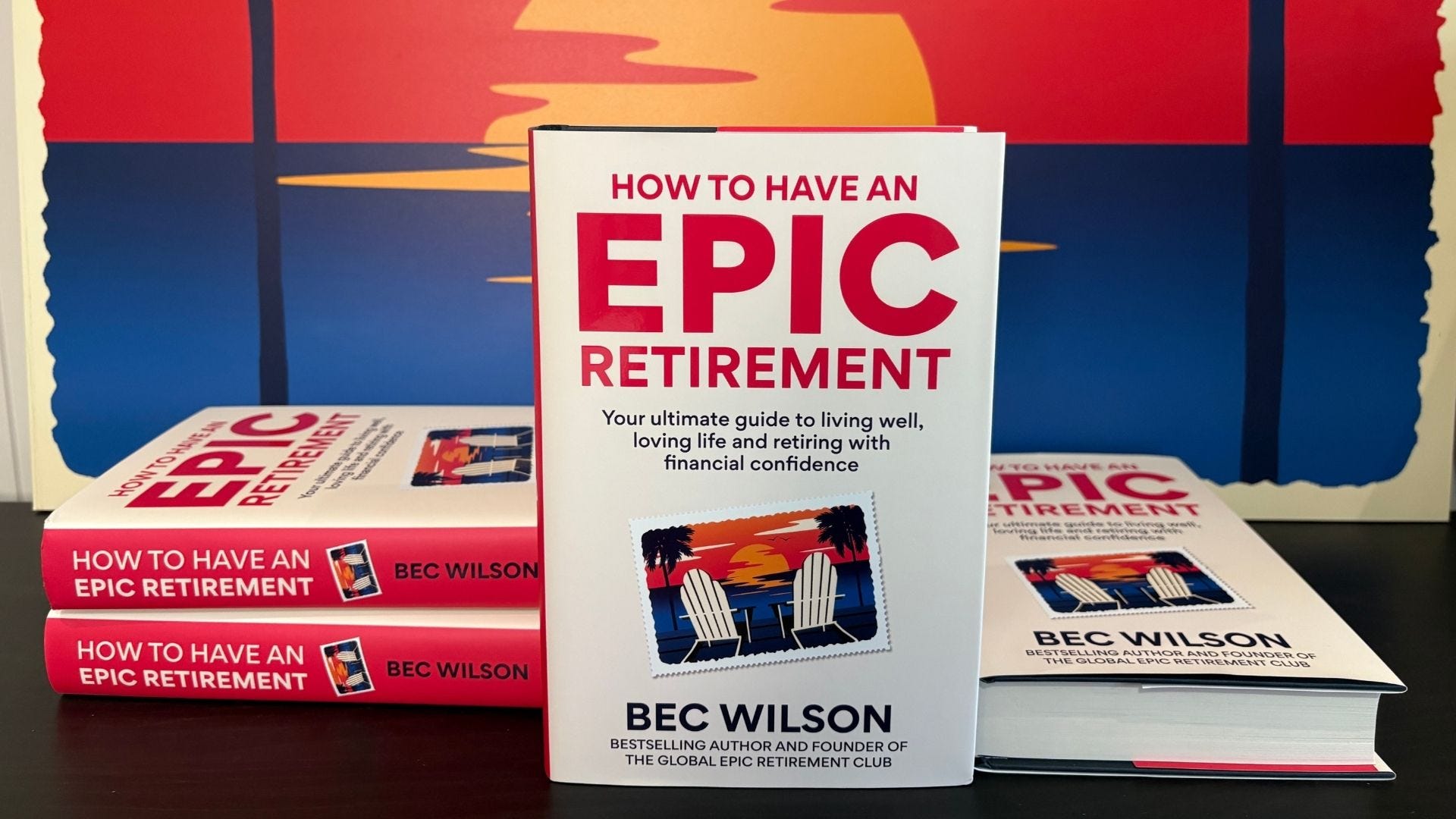
Get your copy of the new UK Bestselling pre-retirement guidebook, How to Have an Epic Retirement: Your ultimate guide to living well, loving life and retiring with financial confidence.
I have had a number of tentative discussions with IFAs over the years (also had a large number of in house IFAs I worked with as I was a tax adviser). Even more discussions since I ‘retired’ - but I have never been convinced they could add anything. I manage my own investments including direct equity selection in my SIPP and direct control of my investment properties.
Furthermore each one I’ve spoken to has largely conceded that point too. As well as my tax background, I invest time each week keeping up with financial news (MoneyWeek and finial columns) and subscribe to 3 investment newsletters.
You have to put in those hours imo. For most people, they do need IFA input as their level of financial literacy is very low. The comments on many of the retirement groups in FB inc Epic Retirement amply demonstrate that low bar. The difficulty in practice though is when their total pot is less than say £100k as it probably isn’t worth the costs. This is at least a large minority
Rarely have I found anyone who gives free advice for free. Invariably, the free advice advisor tries to subtly trash your current approach and tries to gently sway you towards moving your pensions towards their house with free investment portfolio appraisals and market comparisons. It’s a dodgy sector filled with dodgy humans imho